

Kioxia Unveils CXL-Compatible XL1 Memory Expansion Module to Meet AI Data Center Demands
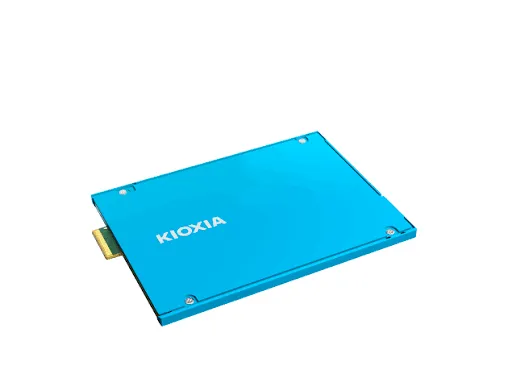
Kioxia Corporation, a global leader in memory solutions and flash storage technologies, has introduced its latest innovation designed to address the growing memory requirements of artificial intelligence (AI) and data center applications. The company announced that it will showcase the KIOXIA XL1 series, a Compute Express Link (CXL)-compatible memory expansion module, during FMS: the Future of Memory and Storage, scheduled to take place from August 4–6, 2026, in Santa Clara, California.
The announcement highlights Kioxia’s continued commitment to advancing memory technologies capable of supporting next-generation AI infrastructure. The XL1 series incorporates the company’s proprietary KIOXIA XL-FLASH technology, a low-latency, high-performance flash memory solution that extends the role of flash memory beyond traditional storage applications. Instead of functioning solely as storage media, the technology enables flash memory to operate as a high-speed memory expansion platform, offering a new approach to balancing performance, capacity, and cost in modern computing environments.
As AI workloads continue to expand across industries, hyperscale data centers are encountering unprecedented challenges related to memory capacity and infrastructure costs. Kioxia’s latest development aims to provide an innovative solution that helps organizations efficiently manage memory-intensive workloads while improving system performance and resource utilization.
Addressing the Memory Challenges of the AI Era
Artificial intelligence has rapidly transformed enterprise computing, scientific research, cloud services, and edge applications. Large language models, generative AI platforms, recommendation engines, and real-time analytics require significantly larger memory capacities than conventional workloads.
Traditionally, these applications rely heavily on dynamic random-access memory (DRAM), which offers exceptional speed but comes with high costs and limited scalability. As AI models continue to grow in complexity and size, expanding DRAM capacity alone becomes increasingly expensive and inefficient.
At the same time, solid-state drives (SSDs) provide massive storage capacity at lower costs but cannot match the ultra-low latency required for active memory operations.
Recognizing this gap, Kioxia has developed the XL1 series to bridge the performance difference between DRAM and SSD storage. By introducing flash memory into the memory hierarchy through the Compute Express Link interface, organizations can expand available memory capacity without relying exclusively on costly DRAM upgrades.
The company believes this approach will help hyperscale cloud providers, AI developers, and enterprise data centers better manage increasingly demanding workloads while improving overall infrastructure efficiency.
KIOXIA XL-FLASH Brings Flash Memory Closer to System Memory
At the heart of the new XL1 series lies KIOXIA XL-FLASH, the company’s proprietary low-latency flash memory technology.
Unlike conventional NAND flash memory designed primarily for storage applications, XL-FLASH delivers significantly faster response times, enabling it to support workloads requiring rapid access to data. This allows flash memory to play a more active role within system memory architectures rather than serving solely as long-term storage.
The technology is particularly valuable for AI applications that frequently process enormous datasets while requiring quick access to selected portions of information.
Instead of maintaining all data in expensive DRAM, systems can intelligently move less frequently accessed data onto the XL1 memory expansion module. Frequently accessed information remains within DRAM for maximum performance, while secondary data resides on XL-FLASH, reducing DRAM capacity requirements without sacrificing application responsiveness.
This layered memory architecture enables more efficient resource allocation and helps reduce infrastructure costs.
Compute Express Link Enables Next-Generation Memory Expansion
A major feature of the KIOXIA XL1 series is its compatibility with Compute Express Link (CXL), an emerging industry standard designed to improve communication between processors, memory devices, and accelerators.
CXL enables high-speed, low-latency connectivity that allows external memory devices to function much more closely with processors than traditional storage interfaces.
By adopting the CXL standard, Kioxia positions the XL1 series as a flexible memory expansion solution capable of integrating into next-generation server platforms designed specifically for AI and high-performance computing.
The technology enables system architects to build scalable memory infrastructures that can dynamically allocate resources where they are needed most.
As demand for AI continues to increase, industry adoption of CXL is expected to accelerate because it provides a standardized method for expanding memory capacity without redesigning server architectures.
Kioxia’s support for this ecosystem reflects its strategy of developing products aligned with emerging open standards.
Improving DRAM Utilization Efficiency
One of the primary objectives of the XL1 series is improving overall DRAM utilization.
In many enterprise workloads, only a portion of allocated memory is actively accessed at any given time. Large amounts of data remain resident in expensive DRAM despite being infrequently used.
The XL1 memory expansion module addresses this inefficiency by relocating less frequently accessed information to the flash-based memory expansion device while maintaining quick accessibility.
This intelligent placement allows organizations to maximize the value of installed DRAM resources rather than continuously increasing DRAM capacity.
For AI training and inference workloads involving enormous datasets, this capability can significantly improve overall memory efficiency while reducing operational expenses.
Organizations can therefore scale AI deployments more economically without compromising application performance.
Optimized for Memory-Intensive AI Applications
Generative AI models have dramatically increased demand for high-capacity memory infrastructure.
Training modern foundation models often involves processing trillions of parameters and enormous datasets that exceed traditional memory capacities.
Inference workloads similarly require rapid access to extensive knowledge bases while maintaining low response times.
The KIOXIA XL1 series has been designed specifically with these emerging requirements in mind.
Its combination of low-latency XL-FLASH technology and CXL connectivity creates a memory expansion platform capable of supporting increasingly complex AI environments.
The module helps alleviate memory bottlenecks that often limit system scalability while enabling larger datasets to remain readily accessible.
This makes the technology suitable for hyperscale cloud environments, enterprise AI deployments, advanced analytics, scientific simulations, machine learning research, and other high-performance computing applications.
Supporting Hyperscale Data Centers
Hyperscale cloud providers operate thousands of servers simultaneously, making infrastructure efficiency a critical priority.
Even modest improvements in memory utilization can generate substantial reductions in hardware investments, power consumption, and operating costs across large deployments.
By offering a memory expansion solution positioned between DRAM and SSD storage, Kioxia provides hyperscale operators with greater flexibility when designing server architectures.
Instead of relying solely on expensive DRAM upgrades, operators can expand available memory resources using flash-based modules optimized for lower latency than traditional storage devices.
This balanced architecture may help organizations improve resource utilization while controlling total cost of ownership.
As AI infrastructure continues expanding globally, efficient memory management is becoming just as important as processor performance.
Evaluation Samples Available Beginning August 2026
Kioxia confirmed that evaluation samples of the XL1 series memory expansion module are scheduled to begin shipping to ecosystem collaborators during August 2026.
The initial samples are intended exclusively for evaluation and development purposes.
These early units will allow hardware manufacturers, cloud service providers, software developers, and technology partners to assess compatibility, performance characteristics, and integration with future server platforms supporting Compute Express Link technology.
The company also noted that some functions may not yet be fully validated, as the products remain under active development.
Consequently, product specifications, features, and performance characteristics may change before commercial availability.
Expanding Kioxia’s Memory Innovation Portfolio
Kioxia has long been recognized as one of the world’s leading developers of flash memory technologies.
The company traces its heritage to Toshiba, which invented NAND flash memory in 1987 and established many of the technological foundations that continue shaping today’s storage industry.
Since becoming an independent company, Kioxia has continued investing heavily in flash memory innovation across consumer, enterprise, automotive, industrial, and cloud computing markets.
Its portfolio includes solid-state drives, embedded memory products, enterprise storage solutions, and advanced BiCS FLASH 3D flash memory technology.
BiCS FLASH has become a key technology supporting high-density storage across smartphones, personal computers, enterprise servers, automotive electronics, hyperscale data centers, and rapidly growing generative AI applications.
The introduction of the XL1 series represents another significant expansion of Kioxia’s technology portfolio by moving flash memory beyond conventional storage into next-generation memory architectures.
As artificial intelligence reshapes computing infrastructure worldwide, memory technologies are becoming increasingly critical to overall system performance. The growing gap between processor capabilities and available memory resources has created new opportunities for innovative architectures that improve scalability without dramatically increasing costs.
Kioxia’s XL1 series demonstrates how low-latency flash memory combined with Compute Express Link technology can help address these challenges. By enabling flash memory to function as a memory expansion solution, the company aims to improve DRAM utilization, reduce infrastructure expenses, and support the expanding requirements of AI-driven data centers.
With evaluation samples scheduled for release to ecosystem partners during August 2026, Kioxia is taking an important step toward advancing memory architectures capable of meeting the demands of next-generation AI, cloud computing, and high-performance enterprise applications.
Source link:https://www.businesswire.com/