
Boom Supersonic Completes First Turbine Core, Opens 2GW Superpower Superfactory and Develops Advanced Digital Foundry
Boom Supersonic has reached a major milestone in its efforts to transform energy generation and supersonic aviation, unveiling its first fully assembled supersonic turbine core, advancing the development of a 2-gigawatt (GW) turbine manufacturing facility, and announcing plans for an advanced all-digital foundry. The company’s latest developments are designed to accelerate turbine production, strengthen domestic manufacturing capabilities, and support growing electricity demand from artificial intelligence (AI) data centers.
The company’s new Superpower Superfactory, located in Centennial in the South Denver area of Colorado, represents a $150 million investment in manufacturing infrastructure. Spanning nearly 200,000 square feet across two buildings, the facility is already producing turbine components while construction and expansion work continue. The campus is expected to create up to 500 high-paying jobs and become fully operational by early 2027.
Boom expects to ship its first single-crystal turbine components in 2027. The facility will manufacture Superpower, the company’s 42-megawatt natural gas turbine designed to supply electricity to AI data centers and other energy-intensive applications. Initial customer deliveries are targeted for mid-2027, with annual production capacity expected to reach 1 GW, equivalent to 25 turbines, by 2028 and 2 GW, or 50 turbines, by 2029.
The first prototype turbine core, named “Sprint Core,” is scheduled to ship to Boom’s vertically integrated test site at Colorado Air and Space Port in Watkins, Colorado. The development marks an important step toward validating the technology that will support both Superpower and Symphony, the engine being developed for Boom’s Overture supersonic passenger aircraft.
“It’s time for a renaissance in energy and in supersonic flight,” said Blake Scholl, founder and CEO of Boom Supersonic. He emphasized that the same team, technology, and company culture are driving progress across aviation and energy. Scholl also highlighted the significance of completing a fully assembled advanced turbine core less than a year after the program began, noting that Boom is expanding its vertically integrated manufacturing capabilities to accelerate production.
Sprint Core Advances Turbine Development and Testing
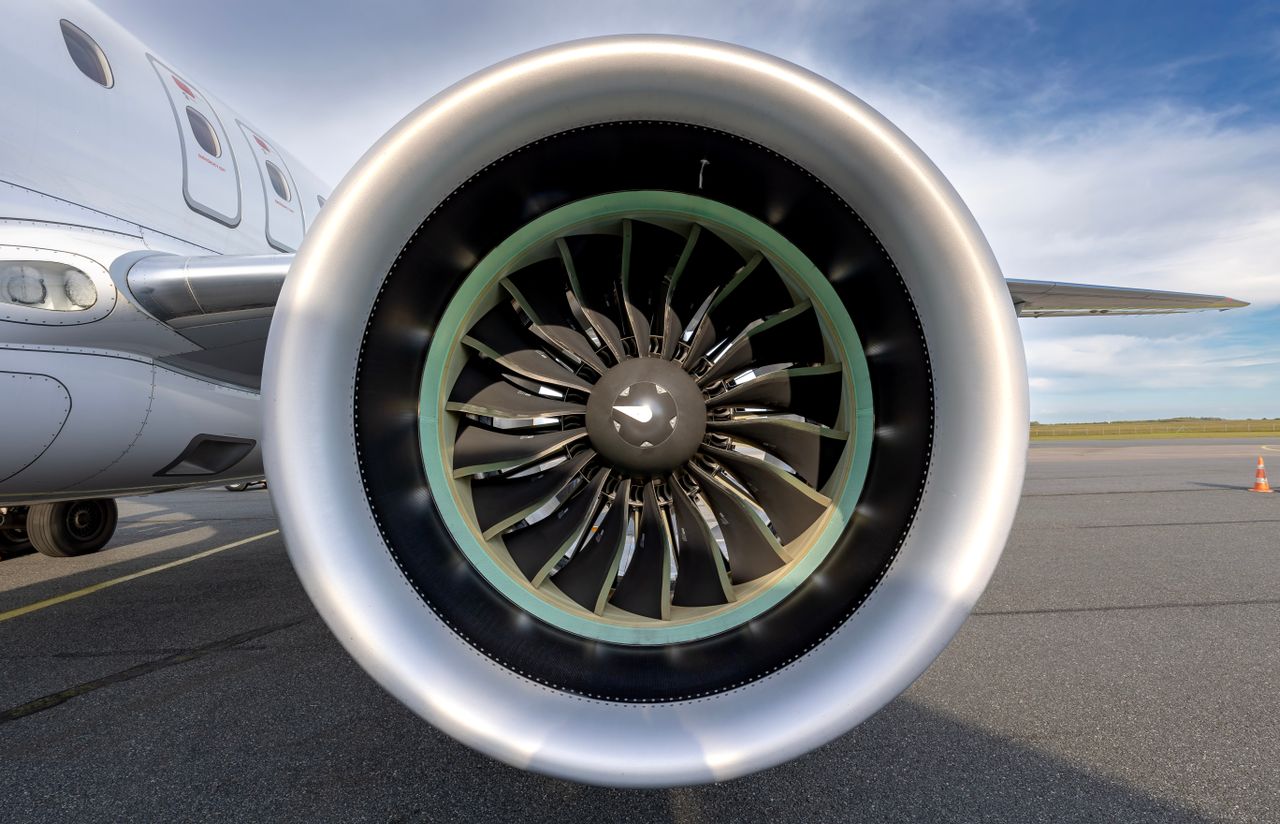
Sprint Core represents the first prototype of the turbine core intended to support two major products within Boom’s technology portfolio. The core combines three critical engine sections: the compressor, combustor, and high-pressure turbine. These components form the most technically challenging portion of both the Superpower energy turbine and the Symphony propulsion system.
Developing and testing the core will help engineers evaluate essential operating characteristics before moving toward production-ready designs. The prototype incorporates more than 1,000 sensors that measure temperature, pressure, mechanical strain, timing, and vibration. When instrumentation for supporting systems, including fuel delivery and lubrication, is included, the complete testing configuration contains approximately 2,000 sensors.
The extensive instrumentation will provide engineers with detailed information about the turbine’s performance under operating conditions. The collected data will help Boom calibrate its engineering tools, validate design assumptions, identify potential improvements, and optimize the production configuration of Superpower.
The turbine core will undergo testing in a dedicated test cell at Colorado Air and Space Port. The next major milestone is the first firing of the turbine, which the company expects to achieve before Thanksgiving 2026. This test will represent an important transition from prototype assembly to operational performance evaluation.
Insights gained from the test program are expected to inform subsequent engineering decisions, allowing Boom to refine components and improve the reliability and manufacturability of its turbine systems.
Superpower Superfactory Expands American Manufacturing Capacity
Boom’s Superpower Superfactory is central to its strategy of bringing critical engineering and manufacturing processes under one organization. The facility is designed to produce a broad range of turbine components, beginning with raw materials and progressing through machining, inspection, assembly, and testing.
Planned products include blisks, turbine blades, vanes, shafts, and cases. Together, these components account for approximately 85% of the finished turbine’s mass, giving Boom substantial control over the manufacturing process.
The company plans to install more than 75 large-format computer numerical control (CNC) machines and coordinate-measuring machines at the campus. These systems will support precision manufacturing and dimensional inspection, enabling engineers to evaluate components against demanding design specifications.
By positioning engineers, machinists, manufacturing specialists, and technicians alongside one another, Boom aims to shorten the feedback loop between design and production. Teams will be able to identify manufacturing challenges, make adjustments, and assess the results without relying on lengthy external supplier processes.
Sprint Core already incorporates several components manufactured by Boom, including compressor vanes, a central drive shaft, turbine cases, and frames. Producing these parts internally demonstrates the company’s approach to integrating engineering development with practical manufacturing experience.
For components brought in-house, Boom aims to move from design modifications to manufactured parts within hours or days, rather than the weeks or months that external supplier schedules can sometimes require. This approach is intended to accelerate development, strengthen quality control, and provide greater oversight of critical components.
The company also expects direct integration between manufacturing and testing to help lessons from prototype evaluations feed immediately into future designs. Such a process could prove especially valuable as production volumes increase and Superpower moves toward its targeted annual capacity of 2 GW by 2029.
Advanced Digital Foundry Targets Single-Crystal Turbine Components
Another major element of Boom’s manufacturing strategy is the planned development of an all-digital single-crystal foundry within the Superpower Superfactory.
The foundry is intended to manufacture advanced turbine blades and vanes using custom superalloys through a digital process designed to eliminate the need for conventional tooling. Single-crystal components are particularly important in demanding turbine applications because they must withstand high temperatures and substantial mechanical stresses during operation.
Developing these components requires specialized manufacturing processes and strict control over material properties. By bringing the capability in-house, Boom aims to improve control over critical turbine-component development while reducing the time required to move from a new design to a physical part ready for testing.
The proposed digital foundry is expected to support faster experimentation and design iteration. Engineers could evaluate new blade geometries, refine manufacturing parameters, and incorporate test results into subsequent production runs more efficiently.
Although the foundry remains a planned capability, it represents a significant part of Boom’s long-term ambition to establish a vertically integrated manufacturing operation. The company expects the combination of digital engineering, advanced materials, precision machining, and specialized casting to support the development of high-performance turbine technology.
Boom also views its digital manufacturing infrastructure as potentially dual-use. According to the company, many of its manufacturing processes could be adapted rapidly from civilian production to defense-related applications with little or no retooling. This flexibility could provide additional opportunities to support different manufacturing requirements as demand evolves.
Government Leaders Attend Manufacturing Milestone Events
Boom presented its latest developments during two programs at its Centennial research and development facility. U.S. Secretary of Energy Chris Wright attended the turbine reveal, while Colorado Governor Jared Polis participated in the announcement highlighting the manufacturing facility and its anticipated employment opportunities.
The participation of federal and state officials brought attention to the potential role of advanced turbine manufacturing in energy infrastructure, industrial investment, and workforce development.
The Superpower Superfactory is expected to create up to 500 high-paying jobs across engineering, machining, technical operations, and related manufacturing functions. Boom is actively recruiting design engineers, manufacturing engineers, machinists, and technicians to help build and operate the facility.
The expansion is taking place as AI data centers increase demand for dependable electricity supplies. By developing a 42 MW natural gas turbine and expanding production capacity, Boom aims to address part of that demand while applying technology and manufacturing capabilities also being developed for its supersonic aviation programs.
Production Targets and the Road Ahead
Boom’s near-term priorities include completing construction at the Superpower Superfactory, advancing Sprint Core testing, and preparing the production system for initial customer deliveries targeted for mid-2027. The company also plans to begin shipping its first single-crystal turbine components in 2027.
Its longer-term manufacturing roadmap calls for annual production capacity of 1 GW by 2028 and 2 GW by 2029. Achieving these targets will require the company to scale manufacturing operations, expand its workforce, refine production processes, and maintain consistent component quality as output increases.
The planned digital foundry could further strengthen this strategy by bringing advanced turbine blade and vane manufacturing under direct company control. However, its ultimate contribution will depend on development progress and successful implementation.
Together, the turbine-core milestone, the operating Superpower Superfactory, and the planned digital foundry demonstrate Boom Supersonic’s effort to connect advanced engineering with large-scale manufacturing. By integrating design, component production, assembly, and testing, the company aims to accelerate the development of energy turbines while continuing to advance the propulsion technology behind its Overture supersonic airliner.
As Boom moves toward its 2027 delivery targets and longer-term production goals, the success of this vertically integrated approach will be an important factor in determining how quickly it can scale its turbine business and meet demand from energy-intensive industries.