

German Industry Calls for Faster Development of Humanoid Robotics to Strengthen Future Competitiveness
Germany’s industrial sector is increasingly viewing humanoid robots as a transformative technology that could reshape the future of automation and manufacturing. According to the latest automatica Trendindex 2026, an overwhelming majority of industrial decision-makers believe that humanoid robotics will play a critical role in driving innovation, improving productivity, and maintaining Germany’s competitiveness in an increasingly automated global economy.
The survey reveals growing support for stronger investment and policy initiatives aimed at accelerating the development and deployment of humanoid robots. Industry leaders are particularly focused on ensuring that Germany remains competitive with countries such as China, which has rapidly expanded its robotics capabilities through coordinated national strategies and significant investments in artificial intelligence and automation technologies.
Strong Support for Humanoid Robotics in Germany
The findings of the automatica Trendindex 2026 demonstrate widespread confidence in the potential of humanoid robots. Among the managers and specialists surveyed, 82 percent stated that Germany should actively promote and further develop humanoid robotics, drawing inspiration from the ambitious robotics programs currently being implemented in China.
The survey was commissioned by automatica and conducted with the support of a professional market research institute. A total of 100 specialists and managers responsible for decisions regarding robotics and automation technologies within their organizations participated in the study. Respondents represented a broad range of industries, including manufacturing, retail, consumer goods, transportation, logistics, healthcare, life sciences, pharmaceuticals, and energy.
The results suggest that industrial leaders recognize humanoid robotics not merely as an emerging technology but as a strategic necessity for future economic growth and industrial competitiveness.
China’s Robotics Strategy Draws Attention
One of the factors influencing German industry’s perspective is the rapid advancement of robotics programs in China. Chinese policymakers have spent years pursuing a comprehensive national robotics strategy designed to strengthen the country’s position as a global leader in automation technologies.
According to Patrick Schwarzkopf, Managing Director of the VDMA Robotics + Automation Association, China has demonstrated remarkable consistency in implementing long-term policies that encourage innovation and industrial automation.
“For years, China has been very consistently pursuing a national robotics strategy to systematically leverage the opportunities of modern automation,” Schwarzkopf explained.
China’s latest five-year development plan places intelligent robotics at the center of its economic and technological ambitions. The strategy emphasizes the development of advanced robotic systems that combine artificial intelligence with physical capabilities, creating machines capable of interacting more naturally with real-world environments.
A key element of this vision is the concept of “embodied intelligence,” where AI software is integrated with robotic hardware to create intelligent systems capable of performing increasingly complex physical tasks. Humanoid robots represent one of the most visible examples of this approach.
By combining sophisticated AI models with human-like mobility and dexterity, these robots have the potential to perform tasks that traditional industrial robots cannot easily handle. Their flexibility could allow them to work in environments originally designed for humans, making them valuable across a wide variety of industries.
AI and Robotics Seen as Essential for Competitiveness
The survey findings indicate that German industry recognizes the strategic importance of artificial intelligence and robotics in maintaining competitiveness on a global scale.
According to the automatica Trendindex, 78 percent of respondents believe that the integration of AI into robotics and automation systems is indispensable for the future success of German industry. This strong consensus reflects growing awareness that technological innovation will be a critical factor in addressing challenges such as labor shortages, rising production costs, and increasing international competition.
Industrial companies are under pressure to improve efficiency while maintaining high standards of quality and sustainability. AI-powered robotic systems offer a promising solution by enabling smarter, more adaptive, and more productive manufacturing processes.
As digital technologies continue to evolve, businesses increasingly view intelligent automation as a key driver of productivity and economic growth. Humanoid robots are emerging as an important part of this broader transformation.
Humanoid Robots Already Gaining Acceptance
Despite being at an early stage of adoption, humanoid robots are already receiving significant attention from industrial decision-makers.
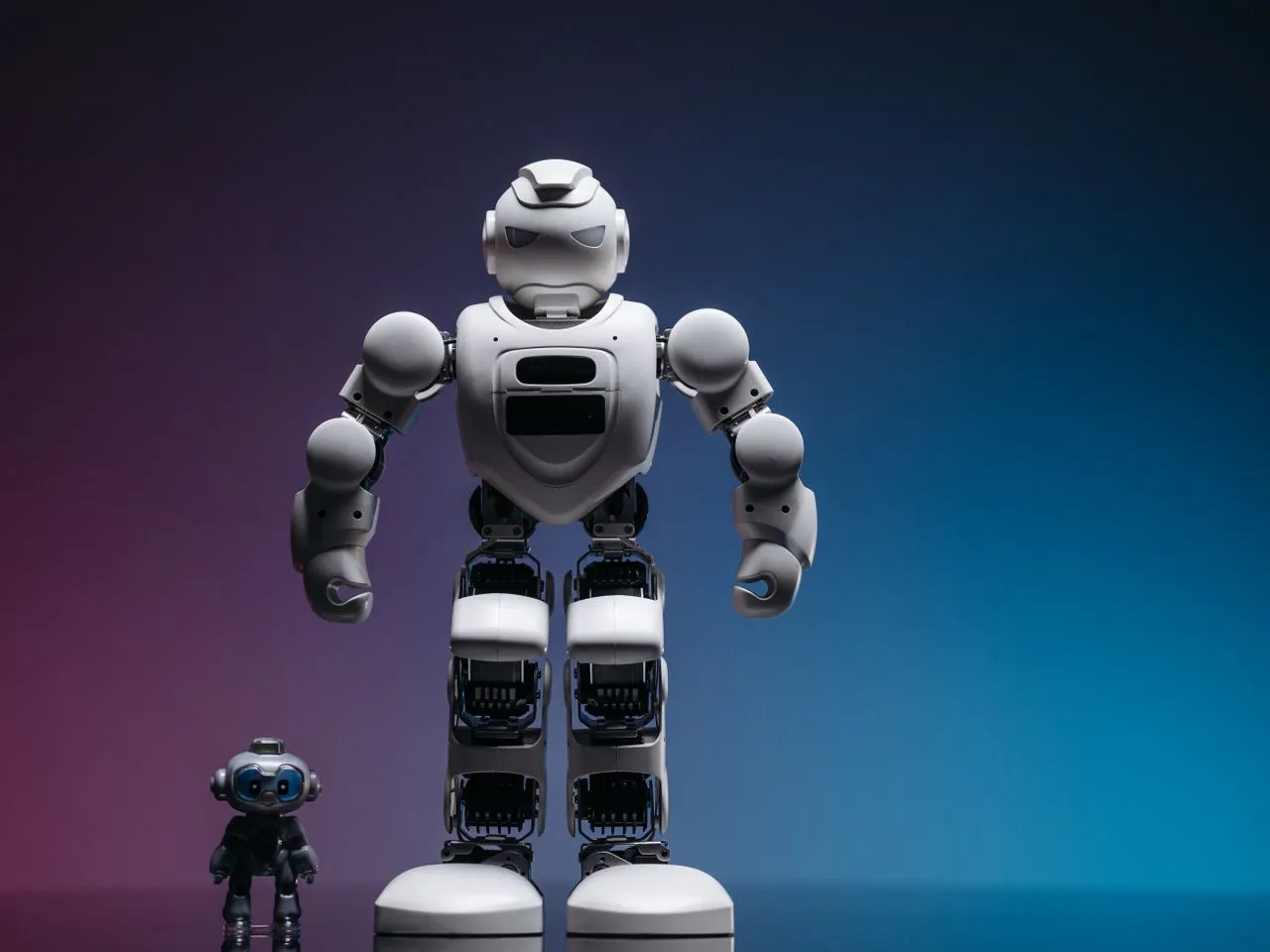
The survey found that 85 percent of respondents consider humanoid robots to be an important addition to industrial manufacturing environments. Their ability to move, manipulate objects, and interact with equipment in ways similar to humans makes them attractive for a wide range of applications.
Unlike traditional industrial robots, which are often designed for highly specialized and repetitive tasks, humanoid robots offer greater flexibility. They can potentially perform multiple tasks within a single facility and adapt to changing operational requirements.
This versatility could prove particularly valuable in industries where production processes frequently change or where human workers and machines must collaborate closely.
However, the survey also highlights that widespread implementation remains a work in progress. Approximately 68 percent of respondents indicated that humanoid robots are still primarily being used in pilot projects and experimental programs rather than in fully established production environments.
This suggests that while enthusiasm is growing, many organizations are still evaluating practical applications, technical capabilities, and return-on-investment considerations before scaling deployments.
Physical AI Represents the Next Stage of Automation
Industry experts increasingly describe humanoid robotics as one of the most compelling examples of what is often referred to as “physical AI.”
Unlike conventional AI systems that operate solely in digital environments, physical AI combines intelligent software with machines capable of interacting directly with the physical world. This enables robots to perceive their surroundings, make decisions, and perform tasks autonomously.
According to Anja Schneider, Exhibition Director of automatica, humanoid robotics showcases the transformative potential of physical AI.
“Humanoid robotics is certainly a particularly compelling example of physical AI, as it involves AI in a human-like form interacting with the real world,” Schneider said.
She emphasized that both physical AI and humanoid robotics are expected to become dominant themes in the coming years, reflecting the rapid pace of technological development in the sector.
As advances in machine learning, computer vision, sensor technology, and robotic mobility continue, experts anticipate that humanoid robots will become increasingly capable and economically viable.
Expanding Opportunities Across Industries
The potential applications for humanoid robots extend far beyond traditional manufacturing environments. While industrial production remains a primary area of focus, these systems could eventually support operations across logistics, healthcare, retail, construction, energy, and service industries.
In logistics facilities, humanoid robots could assist with material handling, inventory management, and package sorting. In healthcare settings, they may help support caregivers and perform routine tasks. Retail businesses could use them for customer assistance and stock management, while industrial plants may deploy them for inspection, maintenance, and assembly operations.
Their human-like design allows them to function within spaces already designed for human workers, reducing the need for costly infrastructure modifications.
As capabilities improve and costs decrease, adoption is expected to expand significantly over the coming decade.
Automatica 2027 to Showcase the Future of Robotics
The growing interest in humanoid robotics is expected to be a major focus at automatica 2027, the world’s leading trade fair for intelligent automation and robotics.
Scheduled to take place from June 22 to June 25, 2027, at the Munich Trade Fair Center, the event will bring together industry leaders, technology developers, researchers, and decision-makers from around the world.
Organizers anticipate that physical AI, intelligent automation, and humanoid robotics will be among the most discussed topics during the exhibition. The event will provide a platform for showcasing the latest innovations and exploring how advanced robotics can address future industrial challenges.
A Critical Moment for German Industry
The findings of the automatica Trendindex 2026 highlight a clear message from German industry: humanoid robotics is no longer viewed as a distant concept but as a technology with significant strategic importance.
Industrial leaders increasingly believe that accelerated investment, research, and policy support are necessary to ensure Germany remains competitive in the rapidly evolving global automation landscape. As countries around the world race to develop intelligent robotic systems, Germany faces a critical opportunity to strengthen its position as a leader in advanced manufacturing and industrial innovation.
With strong support from industry decision-makers and growing advances in artificial intelligence, humanoid robotics appears poised to become a defining technology of the next generation of industrial automation.