
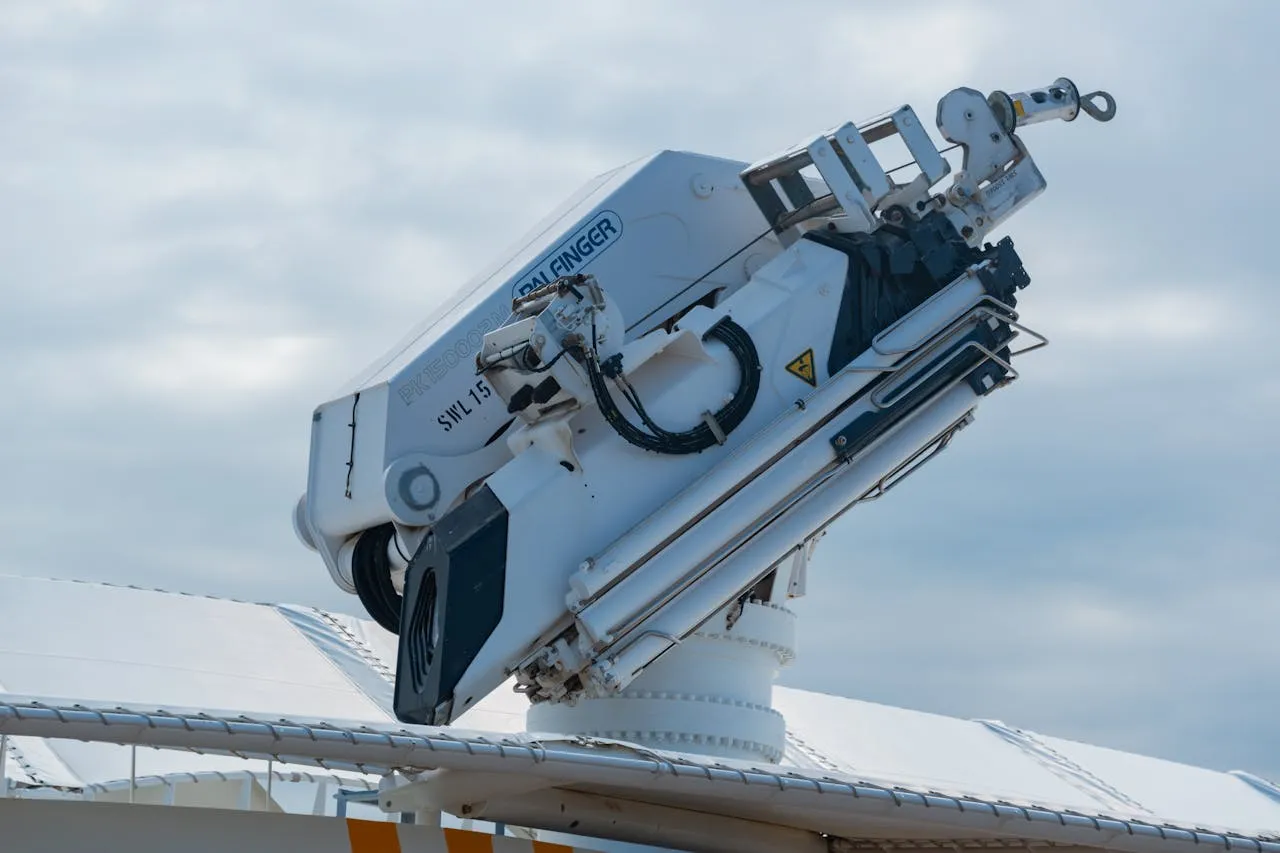
Fairbanks Morse Defense Introduces AutoHook for Autonomous Maritime Operations
Fairbanks Morse Defense (FMD) has unveiled a groundbreaking innovation in maritime technology with the introduction of AutoHook™, a first-of-its-kind fully autonomous vessel recovery interface developed by its Norway-based subsidiary Vestdavit, marking a major advancement in the evolution of Launch and Recovery Systems (LARS) designed to support unmanned and manned maritime operations with zero human intervention while enhancing safety, efficiency, and operational flexibility across naval fleets operating in challenging sea environments
A New Standard in Autonomous Launch and Recovery Systems
AutoHook represents a cornerstone capability in establishing a new industry benchmark for fully autonomous Launch and Recovery Systems, particularly for Unmanned Surface Vehicles (USVs) and other maritime assets that require seamless, hands-free handling during deployment and retrieval operations; the system addresses a long-standing operational gap by eliminating the need for manual intervention during the critical connection phase, which has traditionally posed safety risks and operational limitations for naval crews
The compact and lightweight design of AutoHook ensures that it can be easily deployed across a wide range of vessels without requiring extensive modifications, making it highly adaptable for both existing fleets and next-generation platforms; its innovative architecture removes the need for additional cradles during loading and unloading processes, simplifying operations while reducing equipment complexity and associated costs
Breaking the Sea State Barrier in Maritime Operations
One of the most significant achievements of AutoHook is its ability to operate effectively in higher sea states, surpassing the limitations of traditional manual and semi-autonomous systems that are typically constrained to Sea State 2 conditions; through advanced engineering and robust system design, AutoHook has successfully demonstrated operational acceptance at Sea State 4, representing a major leap forward in maritime capability and reliability
This breakthrough allows naval forces to conduct launch and recovery operations in more demanding environmental conditions, significantly expanding the operational window and enhancing mission readiness in real-world scenarios where sea conditions are often unpredictable and challenging; by breaking the so-called “Sea State 2 ceiling,” AutoHook enables fleets to maintain operational continuity without compromising safety or performance
Enhancing Safety Through Full Automation
Safety remains a central focus of the AutoHook system, as its fully autonomous operation eliminates the need for manual connections between vessels and recovery equipment, thereby removing one of the most hazardous aspects of maritime operations; by reducing direct human involvement in high-risk environments, the system minimizes the potential for injuries and accidents, ensuring a safer working environment for maritime personnel
The elimination of manual handling also contributes to improved operational consistency, as automated processes reduce the likelihood of human error while maintaining precise and repeatable performance across multiple missions; this combination of safety and reliability makes AutoHook an essential tool for modern naval operations, particularly as fleets increasingly rely on unmanned systems to carry out complex tasks
Advanced Technology Driving Performance and Precision
At the core of AutoHook’s capabilities is a sophisticated integration of advanced technologies, including onboard vision systems, artificial intelligence, and integrated thrusters that work together to achieve precise tracking and stable engagement with dynamic targets; the system’s AI-powered vision technology enables it to identify and monitor the position of a rescue craft or unmanned vehicle in real time, ensuring accurate alignment and connection even in turbulent sea conditions
Unlike traditional solutions that rely heavily on operator control units and manual adjustments, AutoHook operates independently, using its onboard systems to make real-time decisions and adjustments that optimize performance and efficiency; the inclusion of integrated thrusters further enhances stability and maneuverability, allowing the system to maintain alignment with moving targets and ensure successful recovery operations
Seamless Integration and Fleet Interoperability
Designed with interoperability as a key priority, AutoHook supports seamless integration across allied naval fleets and aligns with NATO operational standards, making it a versatile and scalable solution for multinational maritime operations; its clamp-on-davit wire unit allows for easy installation without the need for significant modifications to existing vessels, reducing deployment time and cost while ensuring compatibility with a wide range of platforms
The system’s all-in-one design incorporates thrusters, control systems, vision technology, and power supply into a single compact unit, enabling efficient integration without compromising vessel performance or operational capabilities; this streamlined approach ensures that AutoHook can be rapidly deployed across diverse fleets, supporting evolving mission requirements and enhancing overall operational readiness
Supporting the Shift Toward Unmanned Maritime Systems
The introduction of AutoHook comes at a time when naval forces around the world are increasingly adopting unmanned systems as part of a broader shift toward distributed maritime operations; these systems require reliable and efficient launch and recovery solutions that can operate autonomously in real-world conditions, making AutoHook a critical enabler of this transition
By providing a fully automated connection between ship and craft, AutoHook addresses one of the most challenging aspects of unmanned operations, ensuring that USVs and other assets can be deployed and retrieved safely and efficiently without the need for human intervention; this capability not only enhances operational efficiency but also supports the scalability of unmanned fleets, enabling navies to expand their capabilities while maintaining high standards of safety and performance
Leadership Perspective on Innovation and Impact
According to Rolf Andreas Wigand, the development of AutoHook reflects the growing importance of autonomous systems in modern maritime operations, emphasizing that the system not only supports fleet modernization but also overcomes long-standing limitations associated with manual launch and recovery processes; he highlighted that the ability to operate in higher sea states significantly enhances the effectiveness and reliability of naval missions, ensuring that forces can operate confidently in challenging environments
Wigand further noted that AutoHook is designed to meet the operational demands of the U.S. fleet and its allies, providing a scalable and reliable solution that supports both current and future mission requirements; he emphasized the company’s commitment to practical innovation and maritime safety, stating that AutoHook represents a significant step forward in delivering advanced capabilities that align with the evolving needs of global naval operations
Demonstration at Sea Air Space Expo 2026
To showcase its capabilities, AutoHook will be demonstrated at the Sea Air Space Expo 2026, taking place from April 19 to 22, 2026, in National Harbor, where attendees will have the opportunity to experience the system firsthand and learn more about its innovative features and operational benefits; the event provides a platform for industry leaders, defense professionals, and stakeholders to explore the latest advancements in maritime technology and engage with cutting-edge solutions that are shaping the future of naval operations
Visitors to the exhibition will be able to see AutoHook in action and gain insights into how it enhances safety, efficiency, and interoperability in maritime environments, further reinforcing its role as a transformative solution for modern naval fleets
Fairbanks Morse Defense’s Legacy in Naval Innovation
For nearly a century, Fairbanks Morse Defense has been a trusted provider of naval power and propulsion systems, delivering high-quality technologies, OEM parts, and turnkey services to organizations such as the U.S. Navy, U.S. Coast Guard, Military Sealift Command, and the Canadian Coast Guard; the company’s long-standing commitment to innovation and reliability has positioned it as a key partner in supporting critical global naval operations
As a portfolio company of Arcline Investment Management, FMD continues to expand its capabilities and invest in advanced technologies that address the evolving needs of maritime and defense sectors, ensuring that it remains at the forefront of industry innovation while maintaining its focus on safety, quality, and operational excellence
Advancing the Future of Maritime Operations
The introduction of AutoHook marks a significant milestone in the evolution of maritime technology, offering a powerful solution that enhances safety, efficiency, and operational capability while supporting the growing adoption of autonomous systems across global naval fleets; by combining advanced engineering with practical innovation, Fairbanks Morse Defense and Vestdavit are helping to redefine the standards for launch and recovery systems, paving the way for a more resilient and technologically advanced future in maritime operations
As the maritime industry continues to embrace automation and digital transformation, solutions like AutoHook will play a critical role in enabling safer, more efficient, and more scalable operations, ensuring that naval forces are equipped to meet the challenges of an increasingly complex and dynamic operational landscape while maintaining the highest standards of performance and reliability
Source link:https://www.businesswire.com/