
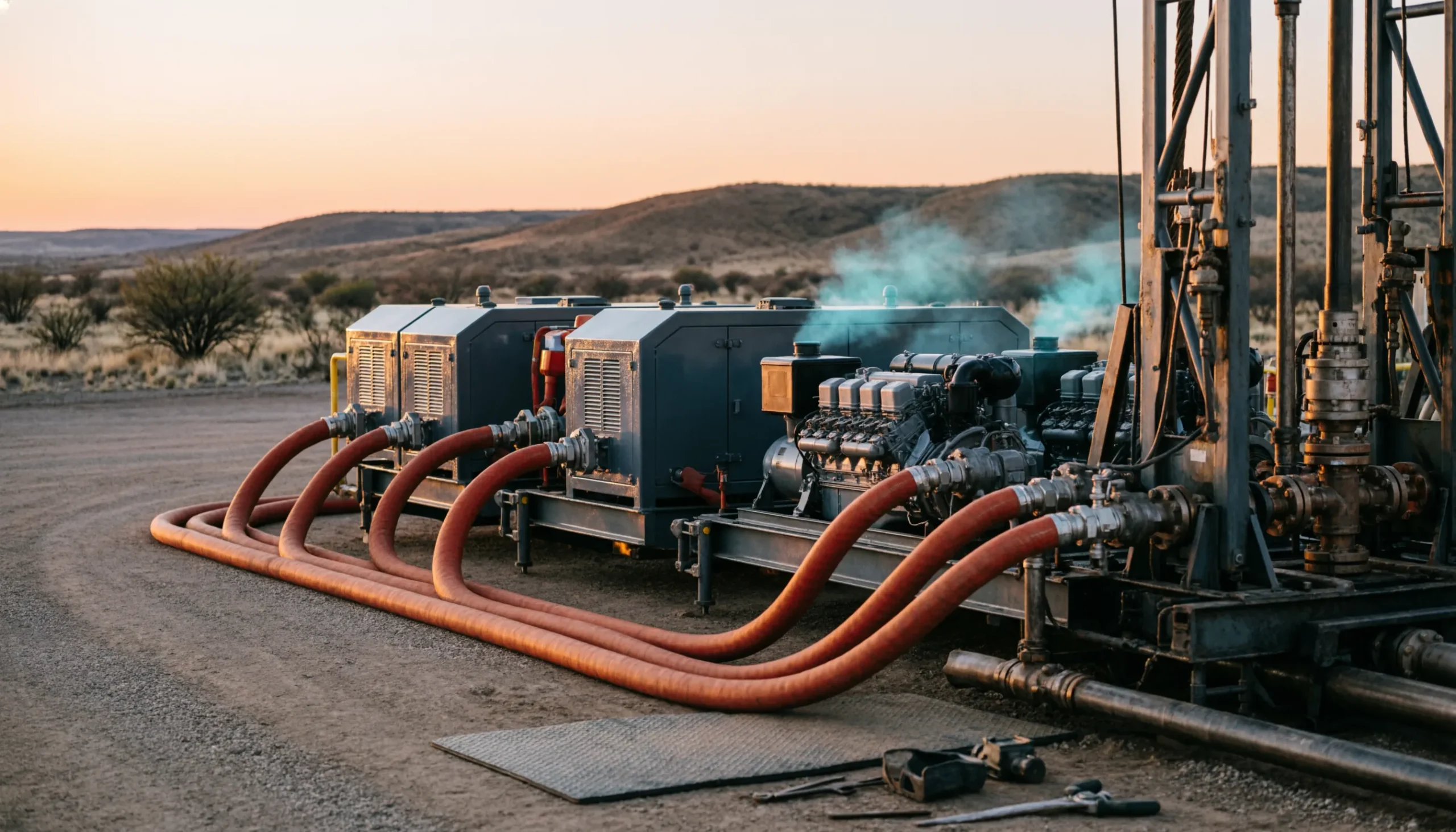
Tenaris Reaches a New Milestone in Gas-Powered Hydraulic Fracturing in Argentina
Published on February 11, 2026, Tenaris announced the successful completion of its first two hydraulic fracturing operations powered by pumps equipped with Dynamic Gas Blending (DGB) technology, representing a meaningful technological and operational advancement for Argentina’s unconventional energy sector and reinforcing the company’s commitment to efficiency, emissions reduction, and long-term development in the Neuquén Basin.
Introduction of Dynamic Gas Blending Technology in the Neuquén Basin
Dynamic Gas Blending technology enables hydraulic fracturing pumps to operate using compressed natural gas as a primary energy source while significantly reducing dependence on diesel fuel, allowing Tenaris to achieve an estimated diesel displacement of around 80 percent during the initial operations carried out on production pads managed by Tecpetrol, the country’s leading shale gas producer and an affiliated company within the same corporate group, thereby demonstrating both technical feasibility and operational reliability under real field conditions in one of the most strategically important shale formations in the world.
Operational Testing and Equipment Validation
The recently completed fracturing stages formed part of a broader testing and validation program designed to evaluate next-generation pumping equipment that will ultimately be deployed in Tenaris’s third dedicated hydraulic fracturing fleet in Argentina, with the program focusing on fuel substitution performance, operational stability, emissions reduction potential, and compatibility with existing completion workflows to ensure that the transition toward gas-powered fracturing can occur without compromising productivity, safety, or service quality across high-intensity shale development campaigns.
Expansion Plans in Vaca Muerta During 2026
Tenaris confirmed that the new hydraulic fracturing set incorporating DGB-enabled pumps is scheduled to begin operations in the Vaca Muerta formation during 2026, a development expected to expand the company’s overall fracturing capacity in one of the largest shale gas reservoirs globally while simultaneously strengthening its competitive positioning and integrated service offering in the basin, where continuous efficiency improvements and lower environmental impact solutions are becoming decisive factors for operators pursuing large-scale unconventional resource development.
Strategic Importance of Emissions Reduction
Company leadership emphasized that the integration of Dynamic Gas Blending technology represents more than a technical upgrade, highlighting its broader environmental implications through measurable reductions in diesel consumption, greenhouse gas emissions, and logistical requirements associated with fuel transport, all of which contribute to more sustainable shale operations and align with evolving regulatory expectations and industry-wide decarbonization initiatives aimed at lowering the carbon intensity of upstream oil and gas activities without slowing production growth.
Industry Context and Early-Stage Adoption
According to Francisco Liberatore, Senior Director of Tenaris Oil & Gas Services, DGB technology remains in the early phases of implementation even in highly mature unconventional basins such as the Permian Basin in the United States, making the achievement of more than 80 percent diesel replacement with compressed natural gas particularly notable within Argentina, where no other service provider has yet reached a comparable efficiency level, positioning Tenaris as a technological frontrunner in the regional transition toward lower-emission hydraulic fracturing solutions.
Efficiency Gains Beyond Fuel Substitution
Beyond emissions reduction, the adoption of gas-powered pumping systems introduces additional operational efficiencies, including improved combustion performance, reduced engine wear, lower fuel handling complexity, and the opportunity to utilize locally available natural gas resources directly at the wellsite, thereby decreasing dependence on diesel supply chains and enhancing overall cost effectiveness for unconventional drilling and completion programs conducted across remote areas of the Neuquén Basin.
Integration With Argentina’s Shale Development Strategy
Argentina’s long-term energy strategy increasingly relies on the continued expansion of Vaca Muerta production to strengthen domestic energy security, reduce imports, and support export growth, meaning that innovations capable of lowering operational costs and environmental impact carry strategic national importance, with Tenaris’s successful deployment of DGB-powered fracturing representing a practical step toward more sustainable large-scale shale exploitation while reinforcing collaboration between service providers and operators such as Tecpetrol.
Investment in Oilfield Services Since 2020
Since deciding in 2020 to enter the hydraulic fracturing segment as part of a broader diversification within its oilfield services portfolio, Tenaris has steadily increased capital investment in Argentina, and once the third fracturing fleet becomes fully operational the company’s cumulative investment in the country’s oilfield services development is expected to reach approximately 240 million US dollars, reflecting a long-term strategic commitment to local infrastructure, workforce capabilities, and advanced completion technologies tailored to unconventional resource extraction.
Growth of Tenaris as a Regional Service Provider
Through continuous operational activity and technology deployment, Tenaris has already completed more than 6,000 hydraulic fracturing stages in Vaca Muerta, enabling the company to establish itself as the third-largest hydraulic fracturing service provider in the basin, a position achieved within a relatively short timeframe that underscores both the scale of regional shale development and the effectiveness of Tenaris’s integrated approach combining tubular manufacturing expertise, oilfield services execution, and innovation in completion technologies.
Strengthening Competitiveness in a Global Energy Landscape
The successful implementation of gas-powered fracturing in Argentina also reflects broader global energy trends in which oilfield service companies are under increasing pressure to deliver lower-emission solutions while maintaining high productivity, particularly in unconventional reservoirs where hydraulic fracturing intensity remains high, and Tenaris’s progress with DGB technology demonstrates how incremental engineering innovation can simultaneously address environmental concerns, operational economics, and customer expectations in competitive shale markets worldwide.
Future Outlook for Gas-Powered Fracturing in Argentina
Looking ahead, the operational validation of Dynamic Gas Blending systems in real-world shale conditions is expected to accelerate broader adoption of gas-substitution technologies across Argentina’s unconventional sector, potentially influencing equipment standards, procurement strategies, and sustainability metrics used by operators as the industry moves toward balancing production growth with emissions management, while Tenaris’s early leadership may provide a foundation for further technological enhancements, including higher gas substitution ratios, digital optimization of pump performance, and integration with electrified or hybrid completion fleets.
A Turning Point for Sustainable Shale Operations
Tenaris’s completion of its first gas-powered hydraulic fracturing operations using DGB technology marks a significant operational, environmental, and strategic milestone for Argentina’s Neuquén Basin, illustrating how targeted investment, technological innovation, and collaboration with leading operators can drive measurable efficiency gains and emissions reductions in unconventional resource development, while the forthcoming deployment of a third fracturing fleet in Vaca Muerta during 2026 signals continued momentum toward a more sustainable and technologically advanced future for the country’s oilfield services industry and its role within the global energy transition.
Source Link:https://www.tenaris.com/