
U. S. Steel announced that it has initiated preparations to restart Blast Furnace B at its Granite City Works facility, a move driven by strengthening customer demand and aligned with the company’s routine strategic and operational planning. This decision marks a significant step for the iconic steelmaker as it continues to evaluate industry conditions, anticipate future needs, and position its assets to meet expected levels of activity in 2026.
According to U. S. Steel, the restart process is already underway, involving multiple phases of inspection, assessment, and workforce engagement to ensure the safe and efficient reactivation of the furnace. Granite City Works, located in Illinois, operates two blast furnaces, both of which have historically played a central role in producing the company’s raw steel output. Restarting Furnace B underscores the company’s expectation that customer requirements—particularly in the automotive, construction, energy, and service center sectors—are set to grow in the coming year.
David B. Burritt, President and CEO of U. S. Steel, emphasized that this decision emerged after a careful and extended review of underlying market dynamics. “After several months of carefully analyzing customer demand, we made the decision to restart a blast furnace,” Burritt stated. His comments highlight the cautious but optimistic approach that the company has taken, reflecting both the opportunities and uncertainties inherent in the steel industry.
Burritt further explained that the restart aligns with U. S. Steel’s commitment to remain responsive to changes in the marketplace while also ensuring operational stability. “Steel remains a highly competitive and highly cyclical industry, but we are confident in our ability to safely and profitably operate the mill to meet 2026 demand. We look forward to partnering with all stakeholders, including the United Steelworkers and elected officials, to ensure a safe and efficient start up and to discuss support for Granite City Works,” he said.
His statement acknowledges the dual realities the company faces: on one hand, a need to seize opportunities in a rising-demand environment; on the other, the volatility that has always characterized steelmaking. U. S. Steel’s decision therefore reflects a balanced approach—moving forward with new production capacity while building partnerships that will reinforce the facility’s long-term viability.
A Strategic Move in a Cyclical Market
The steel industry has historically been affected by economic cycles, geopolitical conditions, trade policies, and shifts in end-client demand. Companies like U. S. Steel regularly undertake scenario planning, demand forecasting, and operational evaluations as part of their standard business processes. The reactivation of Blast Furnace B indicates that the company sees enough stability and forward momentum to justify bringing more capacity online.
This move also reflects broader dynamics within the U.S. steel landscape. As industries such as automotive and infrastructure continue to evolve, demand for domestically produced steel remains an important consideration for manufacturers. Federal initiatives promoting infrastructure development and onshoring of key industrial segments have also contributed to a more positive medium-term outlook.
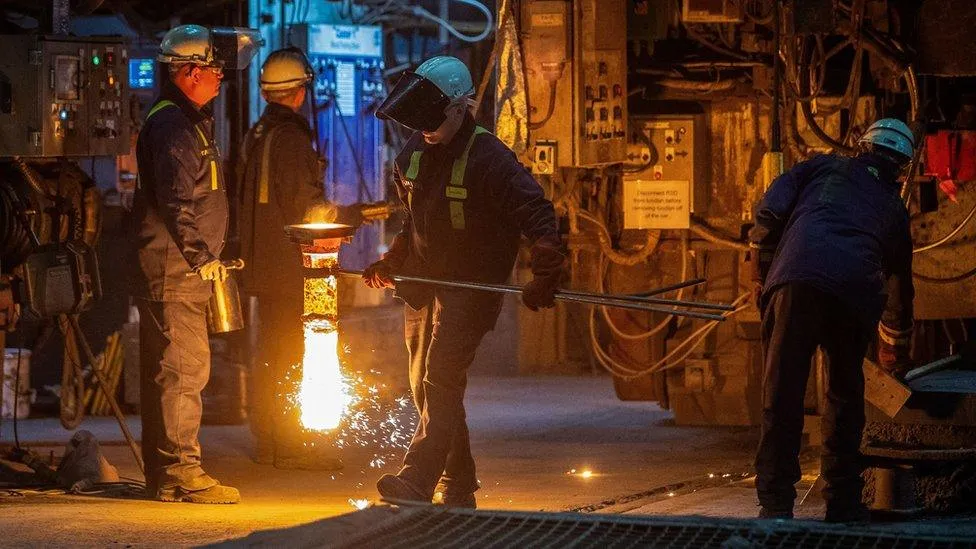
Restarting a blast furnace is not a decision taken lightly. It represents a large capital commitment and requires substantial coordination across engineering teams, unionized labor partners, safety personnel, and supply chain contractors. The process typically involves checking refractory linings, reactivating auxiliary systems, ensuring environmental controls are fully compliant, and preparing raw material logistics—including iron ore, coke, and fluxes. This multistep restart underscores the corporation’s belief in sustained demand over the coming years.
Reinforcing Local and Regional Economic Activity
Granite City Works has long been an important economic pillar for the region. Its furnaces, finishing lines, and supporting facilities have sustained thousands of jobs directly and indirectly. Restarting a blast furnace brings renewed activity to the community: increased contractor work, expanded shifts for union members, and heightened business for surrounding suppliers and service providers.
Because blast furnaces operate continuously and require a full complement of workers, the restart represents a substantive commitment to the local workforce. Burritt’s acknowledgment of the role of the United Steelworkers (USW) in the restart process signals the company’s focus on partnership and collaboration. U. S. Steel and the USW have a long history of negotiating workplace conditions, investment plans, and production strategies to support both operational success and job stability.
Elected officials are also expected to be part of these discussions. Given that steelmaking facilities have significant community impact—from employment to environmental considerations—local, state, and federal representatives often play active roles in ensuring regulatory compliance, economic development incentives, training support, and workforce readiness programs.
Preparing for 2026 and Beyond
By choosing to reactivate Blast Furnace B well ahead of anticipated needs in 2026, U. S. Steel is building early momentum toward meeting its customers’ expectations. The extended lead time allows the company to thoroughly test systems, refine production processes, stabilize inputs, and retrain employees where needed.
Moreover, the restart aligns with the company’s broader strategy of remaining competitive in a global industry where capacity decisions can have long-term implications. Global steel markets continue to be shaped by shifting supply chains, decarbonization trends, energy costs, and environmental compliance requirements. U. S. Steel, like many manufacturers, must balance traditional production assets such as blast furnaces with investments in more sustainable technologies.
Although the statement does not mention broader corporate initiatives, U. S. Steel has in recent years been evolving its asset mix by increasing electric arc furnace (EAF) capacity and investing in advanced mini-mill operations. In that context, maintaining flexibility at Granite City Works allows the company to adapt output to customers’ specifications and provide a blend of traditional and modern steelmaking capabilities.
The company stressed that safety remains its top priority throughout the restart process. Blast furnaces, while essential to steelmaking, are also among the most complex and powerful pieces of industrial equipment. Ensuring that startup occurs safely requires precise coordination across engineering, environmental, and operational teams.
Burritt’s emphasis on engaging all stakeholders signals that the restart is meant to be cooperative rather than unilateral. Whether through labor discussions, community communication, or regulatory engagement, U. S. Steel aims to build confidence around Granite City Works’ renewed activity.
As 2026 draws nearer and plans progress, the company expects the furnace restart to strengthen its production footprint and bolster its ability to respond to customer needs. For customers who rely on consistent supply—especially in sectors that require highly specialized steel grades—having a reactivated and well-maintained blast furnace offers reassurance of long-term capacity.
With this decision, U. S. Steel reinforces its commitment to operational readiness, customer partnerships, and community engagement. The restart of Blast Furnace B demonstrates how the company continues to calibrate its production strategy, balancing caution with growth, and preparing for a marketplace where flexibility and reliability are increasingly essential.
Source link: https://www.businesswire.com/