
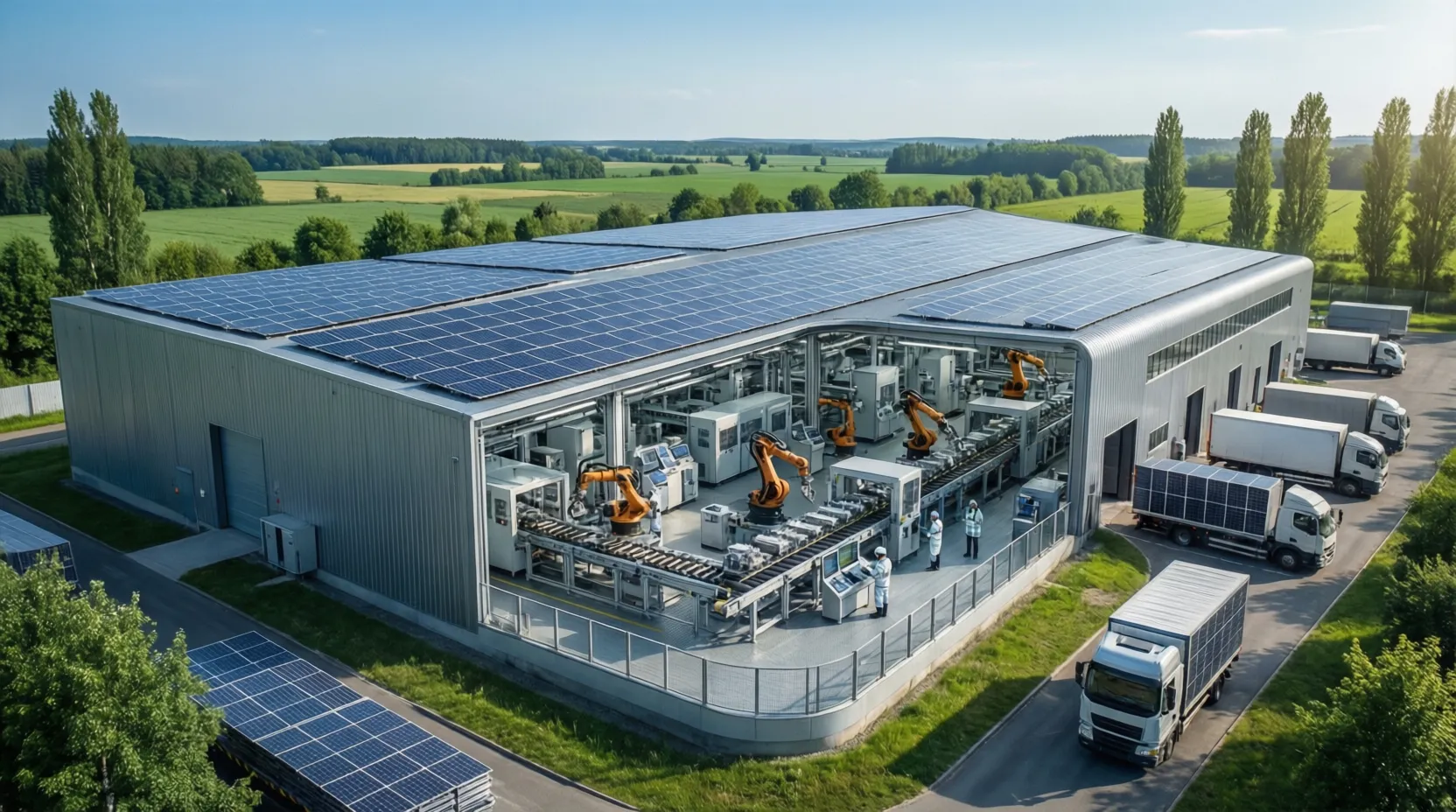
Sungrow, a globally recognized provider of photovoltaic (PV) inverters and energy storage systems (ESS), has announced a major step forward in its European expansion strategy with the establishment of its first manufacturing facility on the continent. The new plant will be located in Wałbrzych, a city in Poland’s Lower Silesia region, and represents a significant investment of approximately €230 million. Covering an area of 65,400 square meters, the facility is expected to play an important role in strengthening Europe’s clean-energy manufacturing base while reinforcing Sungrow’s long-term commitment to the region.
Construction and commissioning of the factory are planned over the coming year, with operations scheduled to begin within the next 12 months. Once fully operational, the site is projected to generate around 400 new jobs, providing opportunities for skilled workers and contributing to the continued development of renewable-energy expertise in the local workforce. The investment reflects not only Sungrow’s growth ambitions but also the broader acceleration of Europe’s transition toward sustainable energy systems.
According to Shawn Shi, President of Sungrow Europe, the new manufacturing site represents a defining milestone in the company’s regional journey. He emphasized that the facility will enable Sungrow to operate closer to its European customers, respond more efficiently to evolving market demands, and enhance supply-chain stability across the continent. Shi also noted that the project aligns with Sungrow’s broader strategy of supporting local economies while creating high-quality employment opportunities tied to the clean-energy sector.
Strengthening Europe’s Clean-Energy Value Chain
The Wałbrzych factory has been designed to support high-volume production, underscoring Sungrow’s confidence in sustained European demand for solar and storage technologies. At full capacity, the facility is expected to produce up to 20 gigawatts of PV inverters annually, alongside energy storage systems totaling approximately 12.5 gigawatt-hours per year. These capabilities position the site as a major contributor to Europe’s renewable-energy infrastructure, particularly as governments and industries accelerate decarbonization efforts.
Advanced manufacturing technologies and rigorous quality-assurance processes will be integrated throughout the production lines. This approach is intended to ensure that Sungrow’s products meet stringent European performance, safety, and reliability standards. By embedding innovation and quality control into the facility’s operations, the company aims to deliver solutions that support grid stability, energy efficiency, and long-term system resilience.
Regional leaders have also highlighted the broader economic and strategic significance of the investment. Marcin Lerner, President of the Management Board of the Wałbrzych Special Economic Zone, described the project as a clear signal of Poland’s growing importance within Europe’s clean-energy landscape. He noted that Lower Silesia has emerged as a highly attractive destination for advanced manufacturing due to its stable economic growth, supportive public programs, strong technical education network, and access to a skilled workforce.
Lerner added that the presence of Sungrow in the region reinforces Poland’s position as a hub for renewable-energy technology development and industrial innovation. The investment is expected to stimulate additional business activity, encourage collaboration between industry and academia, and further integrate the region into Europe’s broader sustainability agenda.
Enhancing Logistics, Resilience, and Customer Proximity
Beyond manufacturing capacity, the new facility is expected to deliver substantial logistical advantages. By situating production closer to European customers, Sungrow aims to reduce delivery times, streamline distribution networks, and improve responsiveness to project requirements. These improvements are particularly significant in a market where supply-chain disruptions and component shortages have highlighted the importance of regional manufacturing capabilities.
Localizing production also contributes to supply-chain resilience, a growing priority across Europe’s renewable-energy sector. Shorter transportation routes can lower costs, reduce emissions associated with shipping, and ensure more predictable delivery schedules. Collectively, these factors strengthen the reliability of clean-energy deployment across residential, commercial, and utility-scale projects.
Shi emphasized that Lower Silesia’s longstanding expertise in electronics, automation, and advanced industrial processes made it an ideal location for Sungrow’s first European factory. He reiterated the company’s intention to recruit talent locally, enabling Sungrow to benefit from regional technical knowledge while supporting community development. This localized hiring strategy reflects Sungrow’s broader philosophy of growing alongside the markets it serves rather than relying solely on centralized global production.
Building on Two Decades of European Presence
Sungrow’s expansion into European manufacturing builds upon nearly two decades of activity in the region. The company first entered the European market in 2005 and later established a dedicated legal entity in 2011, marking the beginning of sustained regional growth. Since then, Sungrow Europe has steadily expanded its footprint, developing an extensive operational network that supports customers across multiple countries.
Today, Sungrow maintains 25 local representative offices throughout Europe, along with two research and development centers that focus on advancing solar and storage technologies tailored to regional needs. The company also operates 26 warehouses to support efficient distribution, as well as three Training and Technology Competence Centers and Service Centers designed to provide technical expertise, customer support, and professional education.
Sungrow’s European headquarters in Munich, Germany, serves as the central hub for these activities, coordinating operations, innovation, and customer engagement across the continent. The addition of a large-scale manufacturing facility in Poland represents the next logical phase of this expansion—transitioning from a primarily sales- and service-oriented presence to a fully integrated regional production ecosystem.
Supporting Europe’s Energy Transition
The announcement comes at a pivotal moment for Europe’s energy landscape. Governments across the continent are accelerating renewable-energy deployment to meet climate targets, reduce dependence on fossil fuels, and strengthen energy security. Solar power and battery storage are playing an increasingly central role in this transformation, enabling cleaner electricity generation while supporting grid flexibility and resilience.
Investments such as Sungrow’s Wałbrzych facility help ensure that the technologies required for this transition are produced within Europe itself. Local manufacturing reduces reliance on imports, supports industrial competitiveness, and contributes to economic growth aligned with sustainability goals. At the same time, it fosters innovation ecosystems where research institutions, manufacturers, and policymakers can collaborate more closely.
For Poland, the project represents both an economic opportunity and a strategic milestone in the country’s evolving energy mix. Historically reliant on coal, Poland has been steadily expanding its renewable-energy capacity in recent years. Hosting a major clean-technology manufacturing site signals the country’s increasing role in Europe’s low-carbon future.
Source Link:https://www.sungrowpower.com/