
INNIO Group Secures Major Order to Support AI-Driven Power Infrastructure
INNIO Group has announced a significant new order from VoltaGrid totaling 1.5 gigawatts of power capacity, marking a major step forward in the companies’ ongoing collaboration to deliver reliable behind-the-meter energy solutions for rapidly expanding artificial intelligence and high-performance computing infrastructure across the United States. The agreement highlights the accelerating demand for scalable, on-site generation capable of supporting energy-intensive data center environments where grid availability, response time, and operational resilience are critical to maintaining uninterrupted digital services and compute performance. By deepening their partnership, both companies position themselves at the center of the evolving energy ecosystem required to sustain the global surge in AI deployment.
Large-Scale Engine Supply to Enable Rapid Deployment
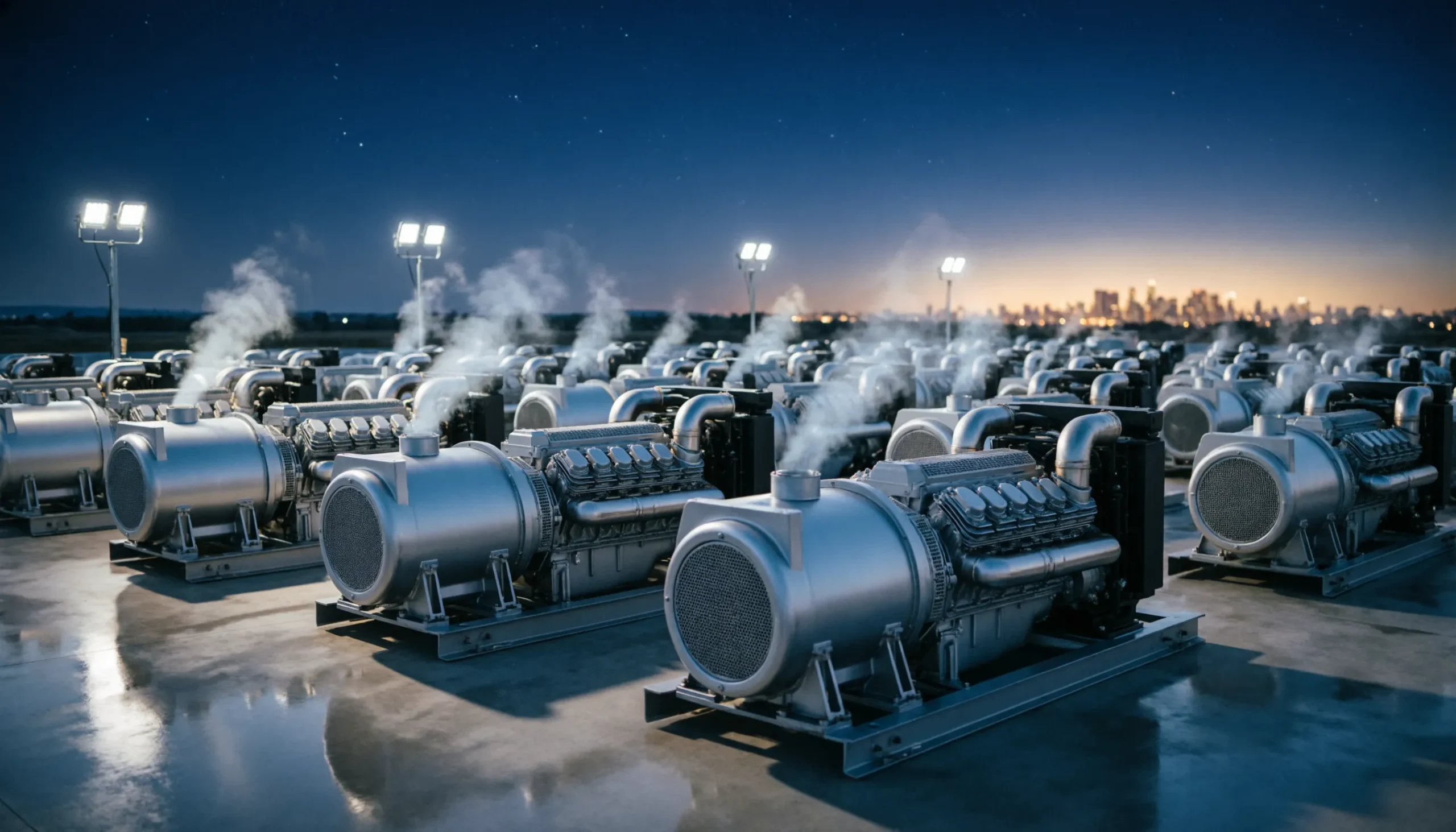
Under the terms of the agreement, INNIO is expected to supply approximately 300 Jenbacher gas engines drawn from its Type J624 and Type J620 product families, technologies widely recognized for efficiency, flexibility, and suitability for continuous and peak power applications. The J624 engines in particular will be integrated into VoltaGrid’s proprietary QPac™ modular power platform, where they will be configured into standardized 25-megawatt units designed for fast installation and scalable expansion. This modular architecture allows data center operators to add capacity in step with computing demand rather than relying solely on long development cycles tied to centralized grid infrastructure. Deliveries of the engines and associated systems are scheduled to continue through 2028, ensuring sustained deployment aligned with projected growth in AI workloads.
Strengthening the Energy Backbone for the AI Era
Leadership from both organizations emphasized that the order represents more than a commercial transaction, framing it instead as foundational infrastructure for the next generation of digital innovation. INNIO Group’s President and Chief Executive Officer, Dr. Olaf Berlien, described the agreement as confirmation of the strength and reliability of the company’s technology portfolio as well as its broader commitment to enabling the expansion of artificial intelligence. From VoltaGrid’s perspective, CEO Nathan Ough characterized the collaboration as a decisive step toward building a resilient and scalable energy backbone capable of supporting the extraordinary computational intensity associated with modern AI systems. Their shared vision centers on delivering grid-grade performance directly at customer sites while reducing dependence on batteries and minimizing delays tied to transmission expansion.
Integrated Power for Demanding Data Center Environments
The jointly developed solution is specifically engineered to meet the operational realities of hyperscale and high-performance computing facilities, where energy demand is both massive and highly dynamic. Powered by Jenbacher gas engine technology, the integrated platform can provide prime power for continuous operation, backup power for reliability, and peaking power for sudden demand spikes within a single unified system. This multifunction capability allows operators to streamline infrastructure planning while maintaining the flexibility required to manage unpredictable compute loads driven by AI training, inference processing, and GPU-intensive simulations. The system’s ability to sustain full output and efficiency even under high ambient temperatures further enhances suitability for diverse geographic deployment across the United States.
Managing Volatile Load Profiles from AI Workloads
Artificial intelligence computing environments present unique electrical challenges due to rapid fluctuations in processing intensity, especially when clusters of graphics processing units transition between idle and peak utilization. The INNIO-VoltaGrid platform is engineered with strong transient performance characteristics that enable it to respond quickly to these variations without compromising stability or efficiency. Such responsiveness is increasingly essential as data centers shift toward real-time AI inference, large-scale model training, and other workloads that can produce abrupt swings in power consumption. By delivering consistent performance under volatile conditions, the solution helps maintain uptime, protects sensitive equipment, and supports predictable operational costs.
Modular QPac™ Architecture Enables Scalable Expansion
Central to the deployment strategy is VoltaGrid’s QPac™ platform, which packages the Jenbacher engines into transportable, modular units capable of rapid installation at customer sites. Each 25-megawatt configuration functions as a building block that can be replicated to match required capacity, allowing projects to scale from tens to hundreds of megawatts without redesigning core infrastructure. This modularity shortens construction timelines, reduces permitting complexity, and provides flexibility for phased investment aligned with data center growth. As AI adoption accelerates, such adaptability becomes a decisive advantage for operators seeking to bring new compute resources online quickly while managing capital expenditure efficiently.
Behind-the-Meter Generation Gains Strategic Importance
The focus on behind-the-meter power generation reflects broader structural changes in the energy landscape driven by digitalization and electrification. Traditional grid expansion often struggles to keep pace with the rapid development cycles of hyperscale data centers, creating bottlenecks that can delay project launches by years. On-site generation using high-efficiency gas engines offers a practical pathway to immediate capacity while still maintaining compatibility with future grid integration and evolving fuel strategies. This approach enables data center developers to secure dependable energy supply independent of transmission constraints, thereby accelerating the deployment of AI infrastructure critical to economic competitiveness and technological leadership.
Reliability, Speed, and Sustainability Considerations
Both companies highlight that the solution is designed not only for performance and speed but also for sustainability and operational efficiency. Modern gas engine systems can achieve high electrical efficiency and support lower emissions compared with legacy generation technologies, particularly when integrated with advanced control systems and potential future use of low-carbon fuels. The elimination of large battery installations in certain applications further reduces material requirements and lifecycle complexity. Together, these characteristics support a balanced pathway toward meeting immediate energy demand while aligning with longer-term environmental objectives shaping the data center industry.
Expanding Collaboration Across Portable Power Systems
Beyond fixed installations, the collaboration also enables integration of VoltaGrid’s portable large-scale data center power systems with INNIO’s generation technology, extending flexibility to temporary deployments, remote locations, or phased construction environments. Portable solutions can provide interim capacity during grid connection delays or support mobile compute operations tied to specialized industrial or research activities. This expanded capability underscores the versatility of the partnership and its potential to address a wide spectrum of power scenarios emerging alongside AI-driven digital transformation.
Market Context: Surging Energy Demand from AI Growth
The scale of the 1.5-gigawatt order reflects the extraordinary rise in electricity consumption associated with artificial intelligence, cloud computing, and data-intensive services. Industry projections consistently indicate that AI workloads will become one of the fastest-growing sources of electricity demand over the coming decade, compelling energy providers, technology companies, and infrastructure developers to pursue new generation models. Distributed, high-efficiency systems such as those offered through the INNIO-VoltaGrid collaboration are increasingly viewed as essential complements to centralized renewable and grid resources. Their ability to deliver immediate, dispatchable power helps bridge the gap between rapid digital expansion and the slower pace of traditional energy infrastructure development.
Long-Term Outlook for Distributed Energy in Data Centers
Looking ahead, the partnership signals a broader shift toward hybridized energy architectures combining on-site generation, grid connectivity, and emerging low-carbon technologies. As regulatory frameworks evolve and sustainability targets intensify, flexible gas engine platforms may incorporate renewable fuels, carbon management strategies, or integration with renewable generation assets. Such adaptability ensures that investments made today remain relevant in a decarbonizing energy system while still addressing urgent reliability needs. The agreement between INNIO and VoltaGrid therefore represents not only a response to current AI-driven demand but also a foundation for future innovation in distributed energy solutions.
Building Infrastructure for the Next Digital Frontier
The newly announced 1.5-gigawatt order underscores the critical intersection of energy technology and artificial intelligence infrastructure, demonstrating how strategic industrial partnerships can accelerate deployment of reliable, scalable power for next-generation computing. Through the supply of hundreds of advanced Jenbacher gas engines, integration with modular QPac™ systems, and a shared commitment to operational flexibility and sustainability, INNIO Group and VoltaGrid are contributing to the construction of an energy framework capable of sustaining the rapid evolution of AI. As data center demand continues to expand, collaborations of this scale and technical depth are likely to play a defining role in shaping the resilience, efficiency, and environmental performance of the digital economy’s underlying power systems.
Source Link:https://www.businesswire.com/