
Strategic Widebody Order Signals Ambitious Growth for Vietnam’s Newest Airline
Boeing and Sun PhuQuoc Airways have formally announced a landmark agreement for up to 40 787 Dreamliner aircraft, a move that establishes the operational and strategic backbone of the carrier’s future long-haul fleet and underscores Vietnam’s accelerating presence in global aviation. The widebody order represents not only a major commercial milestone for the airline’s launch ambitions but also a defining moment for Vietnam’s tourism-driven aviation expansion, positioning the new carrier to connect international travelers directly with one of Southeast Asia’s fastest-growing resort destinations. By selecting the ultra-efficient long-range aircraft platform, the airline is signaling a commitment to sustainable growth, competitive operating economics, and premium passenger experience from the outset of its operations.
Vision Rooted in Tourism, Infrastructure, and Integrated Development
The airline’s parent organization, Sun Group, has framed the aircraft acquisition as a cornerstone of a broader ecosystem that blends aviation connectivity with hospitality, entertainment, and resort infrastructure across Vietnam, particularly on Phu Quoc Island. Chairman Dang Minh Truong emphasized that the partnership with Boeing creates a structural foundation for building a globally competitive airline aligned with the group’s long-term tourism vision. According to leadership, the choice of the 787-9 variant reflects a balance of operational performance, route flexibility, passenger comfort, and long-range capability—qualities viewed as essential for transforming Phu Quoc into a premier international gateway rather than a purely regional leisure destination. This integrated strategy demonstrates how aviation investment is increasingly intertwined with destination development, where airlines serve as catalysts for inbound travel, hospitality revenue, and broader economic activity.
Washington Ceremony Highlights International Collaboration
The aircraft order was commemorated during a formal signing ceremony in Washington, D.C. attended by senior executives from Boeing, Sun Group, and the airline, along with government representatives from Vietnam and the United States. Among those present were Boeing Commercial Sales and Marketing leader Brad McMullen, Boeing Commercial Airplanes President and CEO Stephanie Pope, Sun Group Chairman Dang Minh Truong, and Deputy Chairman Tran Minh Son. The presence of high-level officials—including Vietnamese General Secretary To Lam—underscored the geopolitical and economic importance of the transaction, which stands as the largest widebody aircraft order ever placed by a Vietnamese airline. The event symbolized strengthening aviation and commercial ties between Vietnam and the United States while highlighting aviation’s role in deepening bilateral economic cooperation.
Aircraft Capability Enables True Long-Haul Connectivity
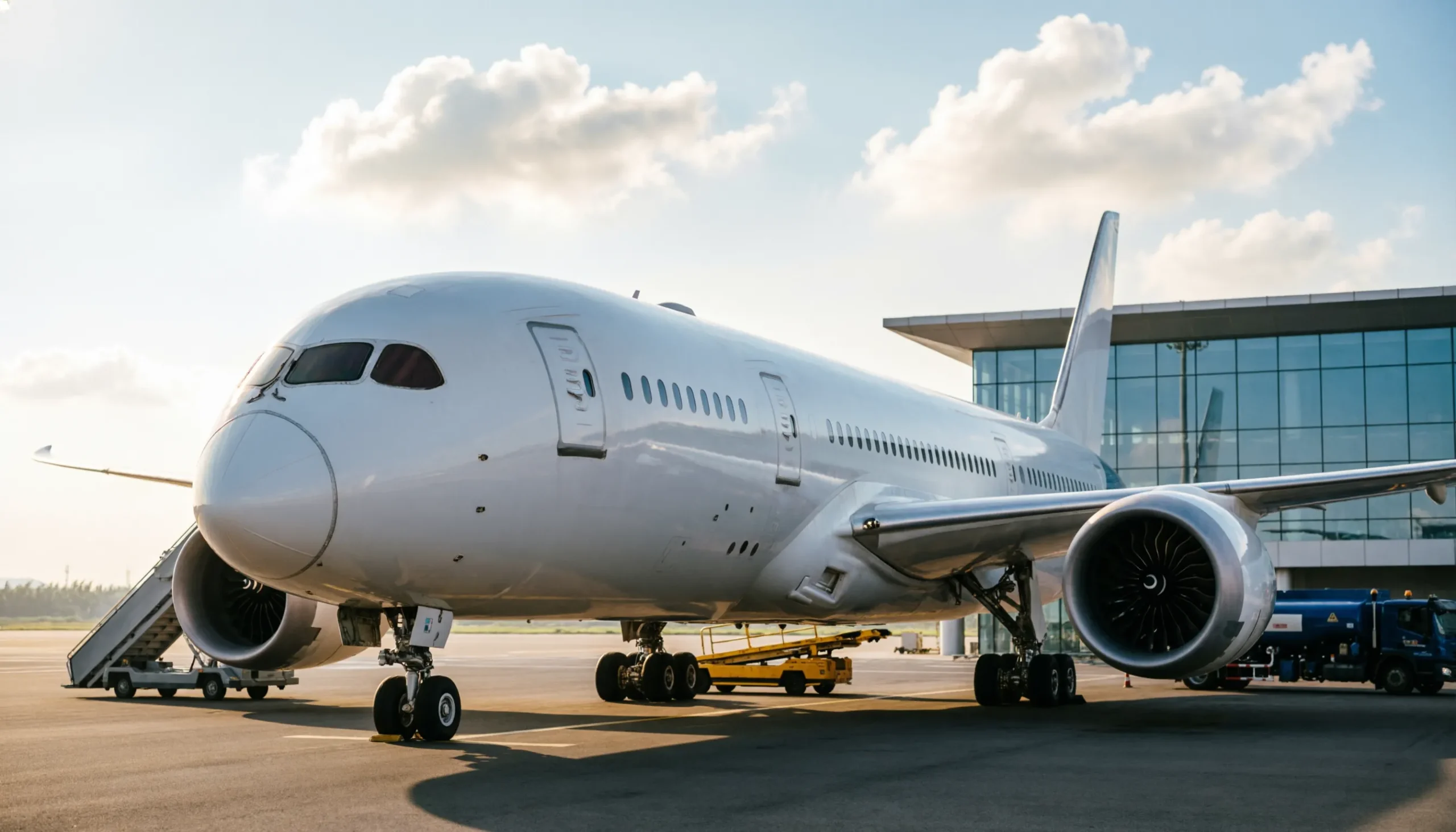
Central to the airline’s growth strategy is the performance envelope of the Boeing 787 Dreamliner, particularly the 787-9 configuration selected for the order. With a maximum range of approximately 7,565 nautical miles, equivalent to more than 14,000 kilometers, the aircraft enables nonstop connectivity between Phu Quoc and major metropolitan centers across Asia, Europe, and North America. Such reach allows the airline to bypass traditional hub-and-spoke dependency and instead operate direct long-haul leisure and mixed-demand routes—an increasingly important competitive differentiator in global aviation. The aircraft’s fuel efficiency and advanced composite construction also contribute to lower emissions per passenger, aligning with evolving sustainability expectations across the aviation sector while helping airlines manage operating costs in a volatile fuel-price environment.
Passenger Experience and Comfort as Competitive Differentiators
Beyond operational economics, the Dreamliner platform is widely recognized for passenger-focused cabin innovations designed to reduce travel fatigue and enhance onboard comfort during long-distance journeys. Features such as larger windows, improved cabin humidity, and lower cabin altitude pressurization collectively contribute to a more comfortable in-flight environment, allowing travelers to arrive feeling less fatigued compared with traditional widebody aircraft. For a leisure-focused airline connecting resort destinations, these experiential advantages are particularly meaningful, as the travel journey itself becomes part of the overall tourism value proposition rather than merely transportation. By embedding premium comfort into fleet selection from day one, Sun PhuQuoc Airways is positioning itself to compete not only on price and destination appeal but also on travel quality and brand perception.
Boeing’s Perspective on Market Expansion and Route Development
Boeing leadership highlighted the strategic implications of the agreement for both the manufacturer and the airline’s future network development. Stephanie Pope noted that the 787-9’s combination of range, fuel efficiency, and passenger comfort provides airlines with the flexibility to open new long-haul markets while maintaining disciplined operating economics. This flexibility is particularly valuable for emerging carriers, which must carefully balance growth ambitions with financial sustainability. By enabling lower trip costs and efficient long-distance service, the aircraft supports gradual, data-driven route expansion—reducing risk while maximizing connectivity potential. Boeing also emphasized the broader tourism benefits associated with new long-haul routes, noting that increased international access can stimulate local economies, hospitality investment, and cross-border cultural exchange.
Global Dreamliner Network Demonstrates Proven Market Impact
Since entering commercial service in 2011, the Dreamliner family has reshaped long-haul aviation economics and route structures worldwide. Airlines operating the platform have collectively launched more than 535 new nonstop routes that were previously considered commercially unviable, illustrating how technological efficiency can unlock entirely new travel patterns. Over 1.2 billion passengers have flown on Dreamliner aircraft globally, reinforcing the platform’s maturity, reliability, and widespread adoption. For a startup airline such as Sun PhuQuoc Airways, joining this established global operator community reduces technical and operational uncertainty while providing access to proven maintenance, training, and support ecosystems. This foundation is essential for scaling safely and efficiently in the competitive international aviation market.
Phu Quoc’s Transformation into a Global Aviation Gateway
At the heart of the airline’s strategy lies the continued development of Phu Quoc as an international tourism and transportation hub anchored by the future expansion of Phu Quoc International Airport. Planned infrastructure enhancements and resort investments are designed to accommodate rising passenger volumes and elevate the island’s global profile. Direct long-haul connectivity enabled by the 787 fleet could significantly shorten travel times for visitors from Europe and North America, making the destination more competitive with established tropical tourism markets. This transformation illustrates how aviation capacity, infrastructure development, and destination branding must evolve together to achieve sustainable tourism growth.
Broader Implications for Vietnam’s Aviation and Economy
The scale of the aircraft order reflects Vietnam’s broader economic trajectory, marked by rising middle-class travel demand, expanding tourism infrastructure, and deeper integration into global trade and transportation networks. As Vietnamese carriers increasingly pursue long-haul expansion, fleet modernization becomes critical for maintaining competitiveness and meeting environmental expectations. Large-scale aircraft investments also generate ripple effects across maintenance services, workforce development, airport operations, and supply chains, amplifying the economic impact beyond aviation alone. The Sun PhuQuoc Airways order, therefore, represents not just a corporate milestone but a national signal of confidence in sustained aviation growth and international connectivity.
Airline and Industry Partnerships
The collaboration between Boeing, Sun Group, and Sun PhuQuoc Airways illustrates a model in which aircraft manufacturers, tourism developers, and airline operators align around shared long-term value creation rather than short-term capacity expansion. By synchronizing fleet capability with destination development and passenger experience, the partners aim to build a resilient aviation ecosystem capable of adapting to market shifts, sustainability pressures, and evolving traveler expectations. If successfully executed, the airline’s Dreamliner-based strategy could redefine how emerging leisure destinations integrate into global air networks—turning regional tourism hubs into direct intercontinental gateways and reinforcing aviation’s central role in economic globalization.
Source Link:https://boeing.mediaroom.com/