

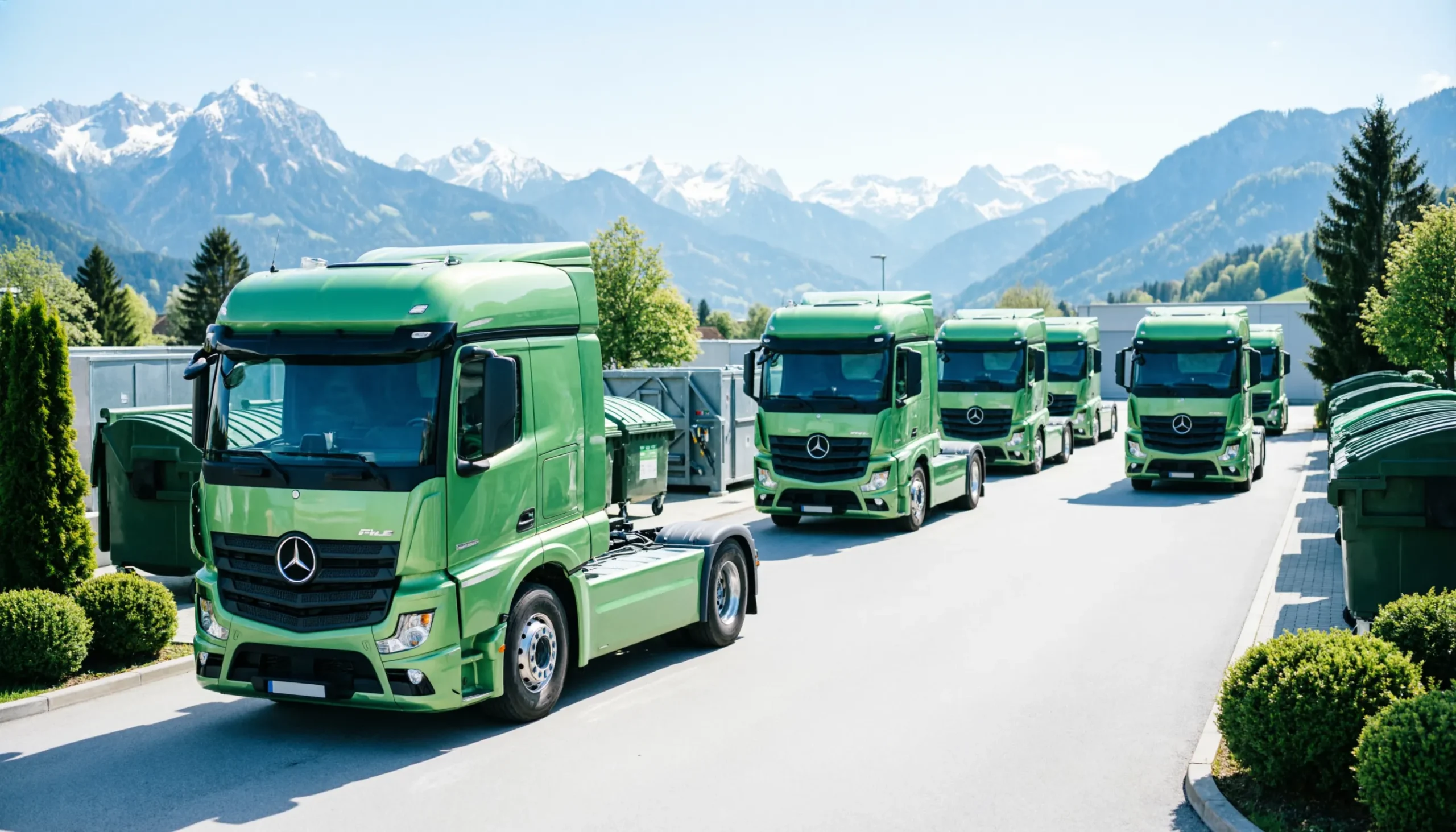
Leinfelden-Echterdingen/Krems (Austria) – In a significant step toward zero-emission heavy-duty transport, Daimler Truck Austria, in collaboration with its long-standing dealer partner Pappas Auto GmbH, has officially handed over 13 all-electric Mercedes-Benz Trucks eActros vehicles to Austrian waste management and circular economy specialist Brantner green solutions; the delivery marks one of the most comprehensive electric truck deployments in Austria’s environmental services sector and underscores a clear commitment to decarbonizing heavy transport operations within the circular economy; the fleet consists of three next-generation Mercedes-Benz eActros 600 units alongside ten first-generation Mercedes-Benz eActros 300 trucks, collectively replacing conventional diesel-powered heavy vehicles and significantly reducing fleet emissions while maintaining operational efficiency in demanding waste collection and logistics environments.
Strategic Partnership Driving Sustainable Transformation
The handover highlights the strength of a decades-long partnership between Daimler Truck Austria and Brantner green solutions, built on technological collaboration and shared sustainability ambitions; according to Florian Edtmayer, Head of Customer Services & Parts at Daimler Truck Austria, Brantner has consistently demonstrated innovative strength and a forward-looking approach to environmental responsibility, making this transition to battery-electric drive technology a natural evolution of the relationship; by integrating the eActros models into its core fleet operations, Brantner signals to the broader industry that electrification in heavy-duty waste logistics is not merely a pilot initiative but a scalable and commercially viable solution; the collaboration also reflects the strategic role of Pappas Auto GmbH in providing regional expertise, aftersales support, and technical integration to ensure seamless fleet adoption and long-term reliability.
Full Integration of eActros Models into Daily Operations
Since the beginning of 2026, Brantner has fully integrated both the eActros 300 and the eActros 600 into its daily collection and disposal logistics workflows; several of the vehicles were delivered in the previous year, allowing for phased deployment, driver training, and route optimization before the full rollout; operating as tractor units, box trucks, and specialized waste collection vehicles, the electric trucks now perform a wide spectrum of heavy-duty tasks across urban and regional routes; depending on operational configuration and payload requirements, Brantner reports achieving driving ranges of 500 kilometers and beyond, demonstrating that battery-electric solutions can meet the endurance demands traditionally associated with diesel fleets; the eActros platform’s modular battery architecture, advanced energy management systems, and optimized drivetrain contribute to this performance capability, ensuring that vehicles remain productive throughout extended working shifts.
Performance, Practicality, and Community Benefits
Beyond range performance, the eActros vehicles have proven particularly effective in heavy-duty applications due to their vehicle concept, torque delivery, and reliability under high-load conditions; electric drivetrains provide immediate torque, which is advantageous for stop-and-go collection routes and urban maneuvering; additionally, locally CO₂e-free operation contributes directly to improved air quality in densely populated service areas; one of the most noticeable benefits, however, is the significant reduction in noise emissions; waste collection activities often take place during early morning hours, and the quieter operation of battery-electric trucks enhances quality of life for residents while creating a more comfortable working environment for drivers and collection crews; this combination of environmental and social benefits aligns closely with Brantner’s broader sustainability objectives.
Advancing the Circular Economy Mission
Manfred Vogl, Managing Director of Brantner green solutions, emphasizes that the company’s international activities within the circular economy are rooted in a clear mission: treating waste not as refuse but as a valuable resource to be reintegrated into production cycles; by investing in electric heavy-duty vehicles, Brantner extends this philosophy beyond recycling operations into transportation logistics, ensuring that the movement of recyclable materials reflects the same sustainability principles as their processing; electrification reduces the carbon footprint associated with material collection and redistribution, thereby strengthening the environmental integrity of the entire circular value chain; this approach reinforces Austria’s broader sustainability targets and positions Brantner as a pioneer in green fleet transformation within the waste management sector.
European Leadership in Battery-Electric Heavy Trucks
The deployment of the eActros 600 forms part of a wider European expansion strategy by Mercedes-Benz Trucks in the battery-electric heavy-duty segment; Joachim Schild, Key Account Manager at Daimler Truck AG, notes that the rollout of the eActros 600 has progressed successfully, contributing to the company’s leadership position in Europe for battery-electric heavy vehicles in the previous year; the collaboration with Brantner originated approximately two years ago, with early strategic discussions taking place during the renowned IFAT Munich trade fair in Munich; those conversations laid the groundwork for a structured transition plan encompassing vehicle testing, route analysis, infrastructure planning, and phased procurement; the presence of 13 operational vehicles today stands as tangible proof of that long-term planning and mutual commitment; positive feedback from drivers further validates the system’s practicality and reinforces confidence in continued fleet electrification.
Charging Infrastructure as a Cornerstone of Success
A decisive factor in the operational readiness of electric fleets is robust charging infrastructure; Brantner has invested strategically in its own charging parks, enabling each e-truck to be fully recharged within a maximum of seven hours; this overnight charging capability ensures that vehicles begin each working day at full capacity without disrupting service schedules; route tracking and telematics data provide additional optimization, allowing fleet managers to identify which collection routes are most suitable for electric deployment and to continuously refine energy consumption patterns; this data-driven approach maximizes efficiency while minimizing operational risk during the transition from diesel to electric powertrains.
Investment in Renewable Energy Integration
Parallel to fleet electrification, Brantner is expanding its renewable energy generation capabilities; high-power charging parks powered entirely by 100 percent green electricity are being developed across multiple company sites; photovoltaic installations on facility rooftops are also being expanded to generate a portion of the fleet’s electricity demand internally within an energy community framework; this integrated strategy ensures that electrification not only eliminates tailpipe emissions but also significantly reduces lifecycle carbon intensity; by coupling electric mobility with renewable generation, Brantner enhances energy independence, stabilizes long-term operating costs, and further strengthens its environmental credentials.
Long-Term Outlook for Electric Waste Logistics
The successful deployment of 13 eActros trucks represents more than a single fleet expansion; it signals a structural shift in how heavy waste logistics can be organized in a carbon-constrained economy; as battery technology advances, charging speeds improve, and grid integration becomes more sophisticated, electric heavy-duty vehicles are poised to achieve even greater operational flexibility; Daimler Truck Austria and Brantner green solutions demonstrate that through strategic planning, infrastructure investment, and collaborative partnership, large-scale electrification in demanding sectors such as waste management is both technically feasible and economically rational; the initiative also sets a benchmark for other municipalities and environmental service providers across Europe considering similar transitions; by combining advanced vehicle technology, renewable energy integration, and a strong circular economy philosophy, the project illustrates a comprehensive pathway toward sustainable industrial logistics and reinforces the growing role of battery-electric trucks in shaping the future of heavy transport.
Source Link:https://www.daimlertruck.com/