


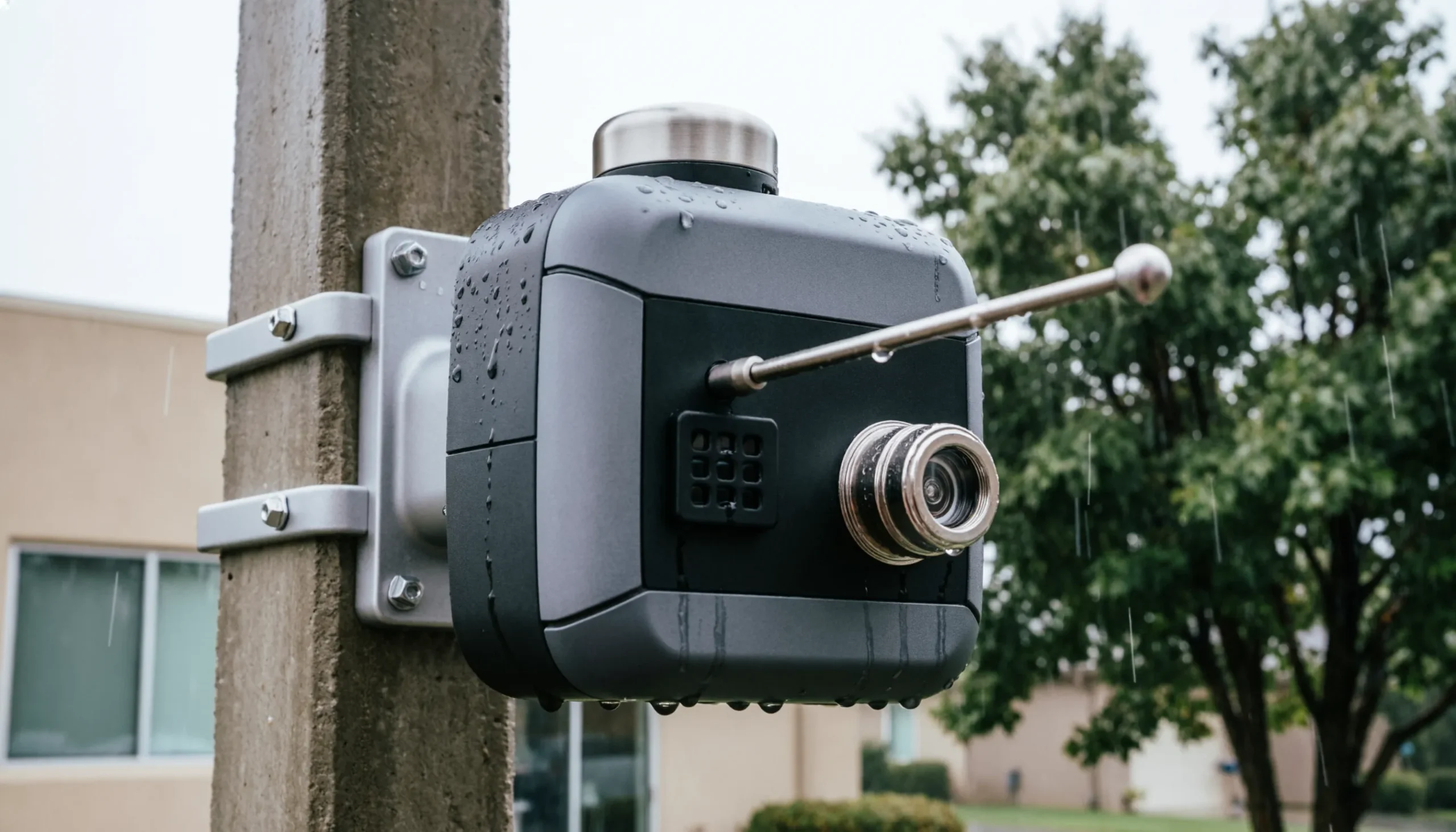
OMRON Electronic Components Collaborates with KS Technologies to Expand LoRa-Enabled Weather Monitoring Capabilities
OMRON Electronic Components has announced a strategic collaboration with KS Technologies (KST) to develop an add-on Long Range communication module for its advanced Weather Sensor platform, marking a significant step forward in accessible, low-cost environmental data transmission. This partnership brings together OMRON’s precision sensing expertise with KST’s specialized knowledge in LoRa network integration, creating a powerful solution designed to extend connectivity, improve environmental visibility, and enable smarter decision-making across multiple industries. The new module integrates LoRa technology directly into the Weather Sensor ecosystem, enabling long-distance, low-power wireless communication that significantly expands deployment flexibility while maintaining cost efficiency. By incorporating LoRa functionality, the companies are addressing the growing need for scalable environmental monitoring solutions that can operate reliably across vast geographic areas without the constraints of traditional wired infrastructure or high-power communication systems.
Enhancing Connectivity Through LoRa Integration
LoRa technology has become increasingly important in industrial and municipal monitoring applications due to its ability to transmit small packets of data over long distances while consuming minimal power. By embedding LoRa capability into the Weather Sensor platform, OMRON and KST are enabling customers to collect, transmit, and analyze localized environmental data in real time without relying on complex or expensive communication frameworks. The add-on module is engineered to seamlessly connect sensors to established LoRa networks, ensuring compatibility with existing IoT ecosystems and minimizing deployment barriers for end users. This streamlined approach supports faster installations, simplified maintenance, and greater scalability as monitoring needs expand. The collaboration underscores OMRON’s commitment to delivering adaptable sensing technologies that integrate smoothly into modern connected infrastructures. With environmental volatility increasing across the globe, reliable weather data has become a mission-critical asset for industries seeking to optimize performance, safeguard assets, and enhance sustainability initiatives.
Strategic Partner Selection and Technical Expertise
OMRON selected KST as its integration partner based on the company’s proven track record in designing and implementing LoRa-based communication systems. KST’s engineering expertise in connecting sensor platforms to LoRa networks ensures that the Weather Sensor module not only performs reliably but also meets evolving industry standards for wireless data transmission. The collaboration reflects a shared focus on innovation, reliability, and long-term scalability. By combining OMRON’s sensor design capabilities with KST’s deep knowledge of embedded systems and IoT connectivity, the two organizations have developed a solution tailored to modern environmental monitoring demands. The partnership also highlights the importance of cross-industry cooperation in accelerating technological advancement, as both companies bring complementary strengths that enhance overall system performance and user value.
Enabling Efficient Environmental Data Collection
The integration of LoRa communication into the Weather Sensor platform enables customers to collect and share environmental data more efficiently than ever before. According to Cary Horan, business development manager at OMRON Electronic Components, the addition of LoRa technology expands the sensor’s flexibility while enhancing its scalability across diverse markets. With improved connectivity, organizations can deploy multiple sensors across wide areas and aggregate real-time data into centralized dashboards for actionable analysis. This capability supports data-driven decision-making processes that enhance operational efficiency and reduce risk exposure. Whether monitoring temperature, humidity, atmospheric pressure, wind conditions, or other environmental variables, the enhanced Weather Sensor system ensures consistent data transmission even in remote or infrastructure-limited locations. The result is a highly adaptable monitoring framework that empowers users to respond proactively to environmental changes.
Applications in Power and Energy Management
In the power and energy sector, accurate weather data plays a vital role in optimizing generation, distribution, and asset protection strategies. Renewable energy sources such as solar and wind are particularly sensitive to environmental fluctuations, making real-time weather intelligence essential for maintaining efficiency and grid stability. The LoRa-enabled Weather Sensor provides localized environmental readings that can be used to forecast production levels, anticipate system stress, and trigger preventive maintenance alerts. Utilities and energy operators can leverage this information to improve load balancing, protect infrastructure from extreme weather damage, and reduce operational costs. By integrating sensor networks across substations, solar farms, wind installations, and distribution facilities, organizations gain comprehensive situational awareness that enhances resilience and reliability. The low-power communication model ensures long-term deployment sustainability, reducing maintenance frequency and extending device lifecycles.
Advancing Smart City Infrastructure
Smart city initiatives depend on interconnected systems that collect and analyze data to improve urban living conditions, infrastructure performance, and public safety. The enhanced Weather Sensor module supports these initiatives by enabling real-time environmental monitoring throughout metropolitan areas. Municipal authorities can deploy sensor networks to track temperature variations, rainfall intensity, wind speeds, and other weather indicators that influence traffic management, emergency response planning, and infrastructure protection. Integration with existing urban IoT frameworks ensures seamless data sharing across departments and platforms. For example, localized storm data can inform drainage system management, while temperature monitoring can guide energy optimization strategies for public buildings. The scalability of LoRa networks allows cities to expand sensor coverage incrementally without significant infrastructure overhaul, making the solution both cost-effective and future-ready.
Supporting Precision Agriculture and Crop Management
Agriculture remains highly dependent on environmental conditions, and precision farming techniques increasingly rely on detailed, location-specific data to optimize productivity. The LoRa-enabled Weather Sensor supports farmers and agribusiness operators by delivering accurate, real-time insights into temperature, humidity, rainfall, and other critical variables. These insights help optimize irrigation schedules, determine ideal planting and harvesting windows, and protect crops from extreme weather events. Long-range wireless communication is particularly valuable in rural and expansive agricultural settings where traditional connectivity options may be limited. By deploying distributed sensor networks across fields and greenhouses, agricultural stakeholders gain granular visibility into microclimates, enabling targeted interventions that enhance crop yield and long-term soil health. This data-driven approach supports sustainable farming practices, reduces resource waste, and strengthens food security outcomes.
Mitigating the Impact of Extreme Weather
As climate variability intensifies, organizations across sectors face increasing risks associated with extreme weather events. Flooding, heatwaves, storms, and sudden temperature shifts can disrupt operations, damage assets, and threaten public safety. The collaboration between OMRON and KST aims to mitigate these risks by delivering precise, spot-level weather data that enhances forecasting accuracy and preparedness planning. Real-time environmental intelligence allows stakeholders to implement proactive measures, allocate resources strategically, and respond quickly to emerging threats. The ability to monitor localized conditions improves situational awareness and reduces reliance on generalized regional forecasts that may not capture microclimate variations. By empowering organizations with actionable insights, the solution supports resilience-building strategies that adapt to evolving environmental challenges.
Scalable and Cost-Effective Deployment
One of the defining advantages of the LoRa-enabled module is its cost efficiency. Traditional wired communication systems can be expensive to install and maintain, particularly across large or remote areas. LoRa’s low-power, long-range architecture reduces infrastructure requirements while maintaining reliable data transmission. This makes it feasible for small and medium-sized enterprises, municipalities, and agricultural operators to implement advanced weather monitoring without prohibitive capital investment. Scalability is another key benefit, as additional sensors can be integrated into existing networks with minimal disruption. The modular design of the add-on communication unit ensures compatibility with current Weather Sensor models, protecting previous investments while expanding functionality.
Driving Sustainable Decision-Making
Sustainability has become a central priority across industries, and environmental data plays a critical role in supporting responsible resource management. By providing continuous, localized weather intelligence, the enhanced sensor platform enables organizations to optimize water usage, reduce energy waste, and minimize environmental impact. Data-driven strategies lead to improved operational efficiency and lower carbon footprints. In energy systems, precise weather monitoring supports renewable integration and grid optimization. In agriculture, it enables water conservation and soil preservation. In urban planning, it informs resilient infrastructure design. The partnership between OMRON and KST demonstrates how advanced sensing technology can contribute meaningfully to sustainability goals while delivering tangible economic benefits.
Collaboration
The collaboration between OMRON Electronic Components and KS Technologies represents more than a product enhancement; it reflects a broader commitment to advancing connected sensing ecosystems. As IoT adoption accelerates globally, the need for interoperable, low-power, long-range communication solutions will continue to grow. By integrating LoRa capabilities into its Weather Sensor portfolio, OMRON strengthens its position in the evolving environmental monitoring market. KST’s expertise ensures that the integration meets rigorous performance standards and supports seamless deployment across industries. Together, the companies are equipping organizations with the tools needed to navigate increasingly complex environmental conditions while maintaining operational efficiency and sustainability leadership. Through innovation, collaboration, and scalable design, the LoRa-enabled Weather Sensor module sets a new benchmark for accessible, intelligent environmental data transmission.
Source Link:https://www.businesswire.com/