
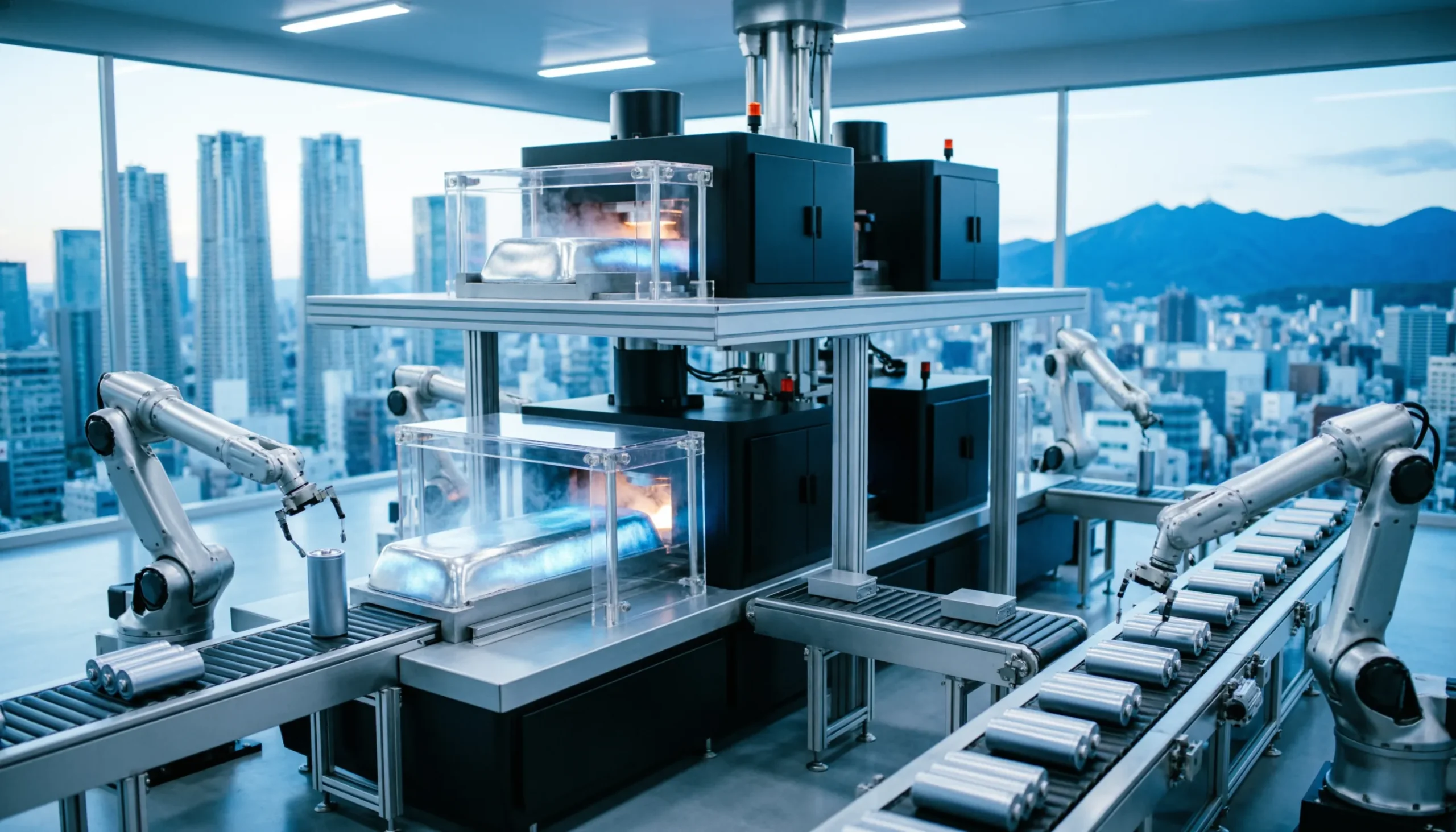
Pure Lithium Secures Japanese Patent for Vertically Integrated Lithium Metal and Battery Manufacturing
Pure Lithium Corporation, an emerging leader in next-generation lithium metal battery innovation, has reached a significant milestone in its global intellectual property strategy with the issuance of a notice of allowance from the Japanese Patent Office. The newly granted protection in Japan covers the company’s foundational patent, titled “Vertically Integrated Pure Lithium Metal Production and Lithium Battery Production,” reinforcing earlier patent grants in the United States and the Kingdom of Saudi Arabia. This development strengthens the company’s global footprint and underscores the strategic importance of the Japanese market in the future of advanced battery manufacturing.
Expanding Global Intellectual Property Protection
With Japan now recognizing the novelty and industrial applicability of Pure Lithium’s vertically integrated production model, the company continues to solidify its international patent portfolio. The foundational patent protects a comprehensive approach that co-locates the manufacturing of pure lithium metal anodes alongside lithium metal battery production. By securing patent rights in one of the world’s most influential battery innovation hubs, Pure Lithium enhances its competitive position while creating pathways for collaboration, licensing, and commercialization throughout Asia. The patent allowance in Japan builds upon prior approvals in the United States and Saudi Arabia, reflecting growing international validation of the company’s proprietary technology.
Pure Lithium has deliberately constructed a robust intellectual property portfolio that now includes more than 140 patents and patent applications worldwide. This expanding patent estate provides protection across materials science, process engineering, battery architecture, and vertically integrated manufacturing methodologies. By safeguarding its innovations across multiple jurisdictions, the company ensures long-term defensibility while enabling strategic partnerships with manufacturers, governments, and industrial stakeholders seeking alternatives to conventional lithium-ion battery technologies.
The Strategic Importance of Japan
Japan holds historic significance in the evolution of modern battery technology. The country pioneered the commercialization of lithium-ion batteries, helping to establish a global market that powers everything from consumer electronics to electric vehicles. Recognition by the Japanese Patent Office signals strong institutional validation of Pure Lithium’s breakthrough approach. According to Founder, Chairman, and CEO Emilie Bodoin, who is also the sole inventor named on the patent, this approval represents a meaningful milestone in advancing lithium metal innovation within a market that has long been synonymous with battery leadership.
The Japanese battery ecosystem remains highly sophisticated, with advanced manufacturing infrastructure, established supply chain networks, and a strong commitment to next-generation energy storage solutions. By securing patent protection in Japan, Pure Lithium positions itself to contribute to the country’s ambitions to reclaim and expand its global battery market share. The company believes its lithium metal technology can enable transformative improvements in energy density, cost efficiency, and supply chain resilience, helping Japanese industry compete more effectively in the evolving global landscape.
Vertically Integrated Manufacturing: A Disruptive Model
At the core of Pure Lithium’s patent is a vertically integrated approach that combines lithium metal anode production and battery assembly within a single operational ecosystem. Traditional battery manufacturing typically involves multiple third-party suppliers, cross-border logistics, and extensive material handling processes. Each stage adds cost, risk, and potential performance degradation. By co-locating these manufacturing steps, Pure Lithium eliminates inefficiencies associated with transportation, handling, and intermediary markups.
This vertically integrated strategy captures margin across the entire production value chain. Rather than outsourcing lithium metal anode manufacturing or sourcing key materials from external suppliers, Pure Lithium controls production from raw material processing through final battery assembly. This integration not only enhances cost control but also ensures stringent quality management, delivering high-purity lithium metal anodes that significantly improve overall battery performance.
The company emphasizes that reducing logistical complexity leads to measurable economic benefits. Eliminating costly international transport of sensitive materials minimizes risk of contamination or degradation while streamlining production timelines. The result is a manufacturing framework designed for scalability, cost reduction, and operational efficiency—critical factors in commercializing advanced battery chemistries.
Replacing Graphite with Lithium Metal
One of the most transformative aspects of Pure Lithium’s technology lies in replacing the graphite anode used in conventional lithium-ion batteries with lithium metal. In today’s lithium-ion cells, graphite constitutes roughly half the battery’s volume and weight. More than 97 percent of the global graphite supply originates from China, creating geopolitical and economic vulnerabilities for manufacturers worldwide.
Lithium metal, by contrast, offers a dramatic leap in performance. It possesses approximately ten times the specific capacity of graphite, enabling batteries that are at least half the weight and potentially double the energy capacity of traditional lithium-ion cells. This represents a step-change in energy density, with implications across electric mobility, aerospace, consumer electronics, and grid storage applications.
By eliminating graphite from the battery architecture, Pure Lithium reduces dependency on concentrated global supply chains. The shift from graphite to lithium metal not only improves technical performance but also enhances strategic supply security for manufacturers seeking diversified sourcing options.
Building the First China-Free Battery Supply Chain
Beyond performance gains, Pure Lithium’s battery platform is notable for establishing what the company describes as the first China-free supply chain for lithium batteries. The design removes graphite entirely and avoids the use of cobalt, nickel, and manganese—materials often associated with geopolitical volatility, ethical sourcing concerns, and price instability.
Instead, the company sources materials locally within target manufacturing regions, enabling battery production in global hubs without exposure to fluctuating tariffs, export controls, or trade restrictions. In an era defined by shifting trade policies and regional industrial strategies, this localization model offers a compelling value proposition for governments and corporations seeking resilient energy infrastructure.
Supply chain independence also supports sustainability objectives. By reducing transportation distances and eliminating reliance on certain mined materials, the vertically integrated model may lower environmental impact and simplify compliance with evolving regulatory frameworks governing critical minerals and clean energy technologies.
Economic Impact and Cost Reduction
The vertically integrated system delivers cost efficiencies at multiple levels. By capturing margins typically absorbed by third-party suppliers, Pure Lithium consolidates value within its own operations. Eliminating unnecessary transportation and handling reduces overhead expenses while minimizing material losses. These savings translate into lower overall battery production costs, which could accelerate adoption in price-sensitive markets such as grid storage and micro-mobility.
Cost reduction is essential for enabling mass commercialization of lithium metal batteries. While lithium metal has long been recognized for its superior energy density, scaling production economically has presented technical and financial challenges. Pure Lithium’s patented methodology addresses these barriers by combining material innovation with manufacturing integration.
Target Markets and Commercial Applications
Pure Lithium is advancing toward the production of what it aims to be the world’s first commercially viable lithium metal battery. The company is targeting a broad range of high-growth applications, including grid-scale energy storage systems that support renewable integration and power reliability. Data centers, which require increasingly dense and reliable backup energy systems, represent another strategic focus area.
Additional applications include micro-mobility solutions such as electric scooters and bicycles, unmanned aerial vehicles and drones, personal electronic devices, and aerospace platforms where weight reduction is paramount. In aerospace and defense contexts, improved energy density can extend mission duration and enhance operational capabilities. For consumer electronics, lighter batteries with greater capacity offer immediate user benefits.
By designing a platform adaptable across diverse sectors, Pure Lithium increases its addressable market while demonstrating the versatility of lithium metal technology. Each application benefits differently from improvements in energy density, weight reduction, and supply chain resilience, reinforcing the broad commercial potential of the innovation.
Continuing Expansion Across Asia
Following patent recognition in Japan, Pure Lithium intends to pursue additional intellectual property protections throughout Asia. The region represents a substantial share of global battery production capacity and technological innovation. Establishing a comprehensive patent presence supports the company’s long-term strategy of licensing, joint ventures, and potential manufacturing partnerships across key industrial economies.
Emilie Bodoin has emphasized the company’s commitment to expanding intellectual property protection to safeguard its innovations and facilitate collaboration. By securing legal protection early in high-value markets, Pure Lithium positions itself to influence the next phase of battery evolution while maintaining control over its proprietary processes.
A Transformative Moment for Battery Technology
The issuance of a Japanese patent for vertically integrated lithium metal production marks more than a legal achievement; it signals growing confidence in lithium metal as a successor to lithium-ion technology. As the global energy transition accelerates and demand for higher-performance storage intensifies, innovations that deliver both economic and strategic advantages will play a defining role.
Pure Lithium’s integrated manufacturing approach addresses multiple industry pain points simultaneously: performance limitations of graphite-based batteries, supply chain concentration risks, rising material costs, and logistical inefficiencies. By combining high-purity lithium metal anode production with in-house battery assembly, the company presents a cohesive solution rather than an incremental improvement.
With more than 140 patents and applications forming a comprehensive intellectual property fortress, Pure Lithium is positioning itself as a central innovator in the transition toward lithium metal batteries. The Japanese patent allowance reinforces international recognition of the company’s foundational technology and sets the stage for expanded partnerships, commercialization efforts, and continued advancement across global markets.
Source Link:https://www.businesswire.com/