


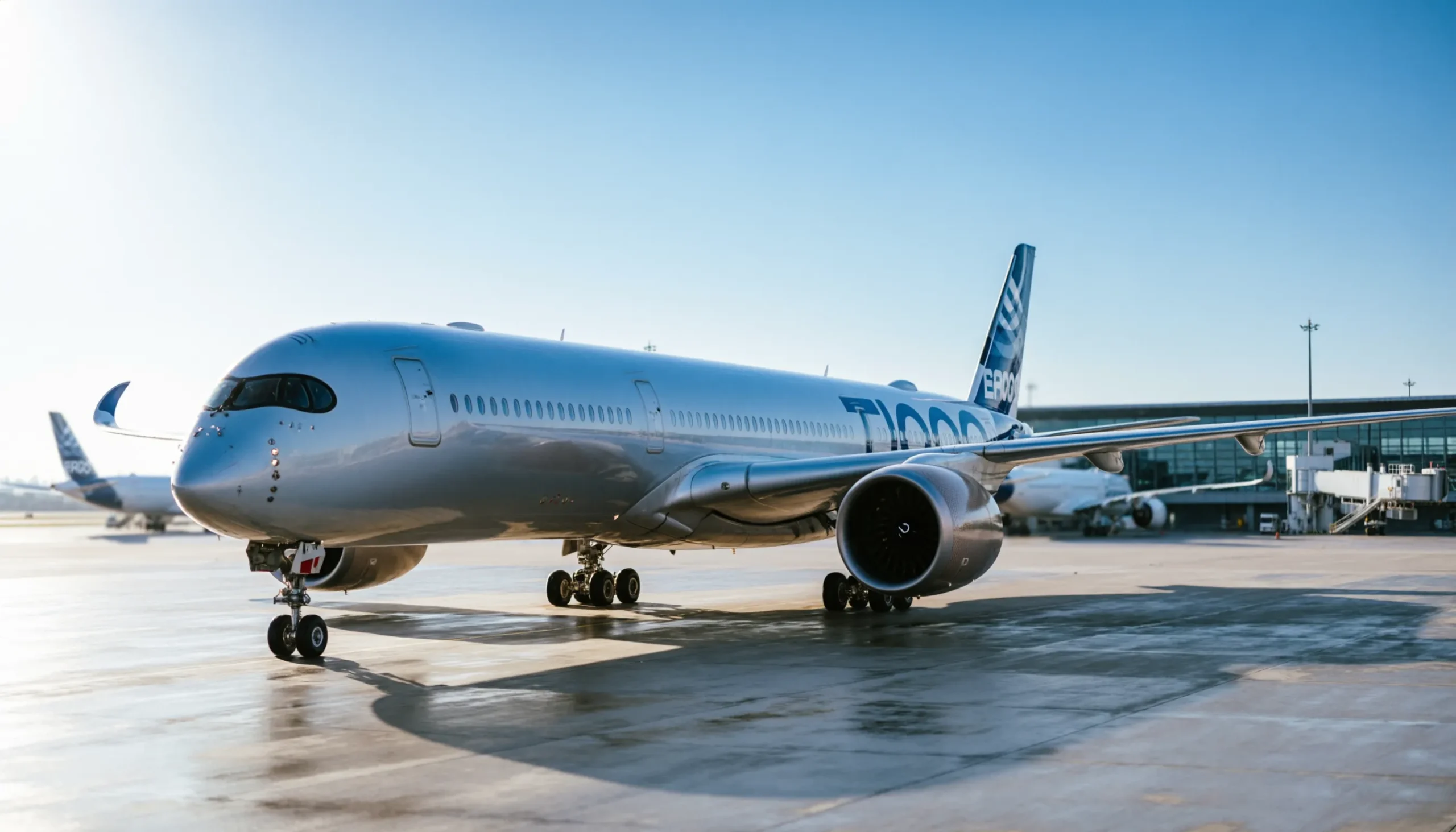
Air Canada Strengthens Long-Haul Vision with Airbus A350-1000 Order
Air Canada has taken a significant strategic step in reshaping its future intercontinental operations by confirming a firm order for eight Airbus A350-1000 aircraft, reinforcing its long-term commitment to advanced widebody technology and signaling confidence in sustained global travel demand. Although the transaction originally appeared as an undisclosed order in Airbus’ November 2025 order book, the formal disclosure now highlights the airline’s intention to modernize its fleet with aircraft capable of delivering superior efficiency, extended range, and an elevated passenger experience. This acquisition represents more than a routine fleet renewal decision; it reflects a broader transformation of Air Canada’s network ambitions, sustainability priorities, and competitive positioning within the rapidly evolving long-haul aviation market.
Transformational Economics and Competitive Efficiency
The Airbus A350-1000 is widely recognized for combining next-generation aerodynamics, lightweight composite structures, and advanced propulsion systems to produce meaningful reductions in operating costs compared with earlier widebody aircraft. For Air Canada, these economic advantages translate into improved fuel efficiency, lower maintenance requirements, and optimized seat-mile economics that enhance profitability across ultra-long-haul routes. The aircraft’s operational performance enables airlines to serve distant destinations more efficiently while maintaining strong load factors and competitive pricing, a combination that is increasingly critical as carriers navigate fluctuating fuel prices, environmental regulations, and shifting passenger demand patterns. By integrating the A350-1000 into its fleet strategy, Air Canada positions itself to operate high-capacity long-range services with reduced environmental impact and stronger financial resilience.
Expanding Global Reach Through Ultra-Long-Haul Capability
One of the defining characteristics of the A350-1000 is its exceptional range capability of up to approximately 9,000 nautical miles, allowing nonstop connectivity between Canada and some of the world’s fastest-growing travel markets. This extended reach opens new opportunities for direct routes linking Canadian hubs with major cities across the Indian subcontinent, Southeast Asia, and Australia—regions where passenger traffic, tourism flows, and business travel demand continue to expand. Nonstop service on such long sectors not only improves convenience for travelers but also strengthens hub competitiveness by reducing travel time and eliminating intermediate connections. For Air Canada, deploying aircraft with this level of endurance supports a broader network strategy focused on seamless global mobility and stronger integration with international partners and alliance networks.
Leadership Perspective on Fleet Evolution
Senior leadership at Air Canada views the A350-1000 selection as a natural progression in the airline’s long-haul fleet development, emphasizing both operational performance and customer-centric innovation. Mark Galardo, Executive Vice President and Chief Commercial Officer and President of Cargo at Air Canada, underscored that the aircraft introduces state-of-the-art capabilities and efficiency improvements that will unlock new intercontinental opportunities while reinforcing the airline’s global ambitions. The addition of the A350-1000 is expected to play a defining role in shaping the next chapter of Air Canada’s international growth, strengthening connections between Canadian gateways and destinations worldwide while supporting cargo capacity expansion alongside passenger services.
Airbus Perspective on Strategic Partnership
From Airbus’ standpoint, Air Canada’s decision to adopt the A350-1000 highlights strong confidence in the aircraft’s technological maturity and market leadership among modern widebodies. Benoît de Saint-Exupéry, Executive Vice President of Sales for Airbus Commercial Aircraft, characterized the order as evidence of the aircraft’s ability to deliver superior range, efficiency, and passenger satisfaction. Beyond simple fleet replacement, the agreement represents alignment between manufacturer and airline around long-term performance standards and sustainability objectives. Airbus continues to position the A350 family as a cornerstone solution for airlines seeking to balance environmental responsibility with profitable long-distance operations, and Air Canada’s order reinforces that positioning within the North American market.
Passenger Comfort and the Airspace Cabin Experience
A central feature of the A350-1000 is the Airspace cabin design, which integrates advanced environmental control systems, optimized lighting architecture, and improved acoustics to enhance traveler wellbeing on extended flights. Passengers benefit from one of the lowest cabin altitudes available in commercial aviation, higher humidity levels, and significantly reduced noise compared with earlier aircraft generations. These elements collectively reduce fatigue and improve comfort during ultra-long-haul journeys, aligning with Air Canada’s emphasis on delivering a premium travel experience across all cabin classes. The spacious cabin architecture also enables flexible seating configurations, modern in-flight entertainment integration, and refined interior aesthetics that reflect evolving passenger expectations in global aviation.
Advanced Technology and Environmental Performance
Technological innovation sits at the core of the A350 program, combining cutting-edge aerodynamics with Rolls-Royce’s latest-generation engines and extensive use of composite materials to achieve approximately 25 percent lower fuel burn and emissions relative to previous-generation competitor aircraft. Such improvements are increasingly vital as airlines face mounting pressure to reduce carbon intensity while maintaining operational efficiency. Lower fuel consumption not only decreases environmental impact but also provides meaningful cost savings over the aircraft’s lifecycle, reinforcing the financial rationale behind Air Canada’s investment. These technological gains demonstrate how next-generation aircraft design can simultaneously support sustainability goals and commercial performance.
Commitment to Sustainable Aviation Fuel and Future Readiness
Sustainability remains a defining theme across the aviation sector, and the A350 platform is already certified to operate with blends containing up to 50 percent Sustainable Aviation Fuel. Airbus continues to pursue the long-term objective of enabling all its aircraft to operate with 100 percent SAF by 2030, a milestone that would significantly reduce lifecycle carbon emissions when combined with advances in fuel production and supply infrastructure. For Air Canada, incorporating SAF-capable aircraft strengthens alignment with national and international climate targets while providing operational flexibility as sustainable fuel availability expands. The integration of efficient aircraft and alternative fuels represents a crucial pathway toward decarbonizing long-haul air travel without compromising connectivity.
Market Momentum of the A350 Family
By the end of January 2026, the Airbus A350 family had accumulated more than 1,500 orders from 67 customers worldwide, underscoring strong global confidence in the platform’s capabilities. This broad adoption across multiple continents and airline business models reflects the aircraft’s versatility in serving both high-density trunk routes and ultra-long-haul city pairs. Continued order momentum also signals airline expectations for sustained recovery and growth in international travel demand over the coming decades. Air Canada’s latest commitment therefore fits within a wider industry trend favoring efficient, long-range twin-engine widebodies capable of replacing older four-engine aircraft and less efficient legacy models.
Strategic Implications for Air Canada’s Future
The introduction of the A350-1000 is poised to influence multiple dimensions of Air Canada’s operations, from route planning and fleet harmonization to customer experience and environmental performance. Enhanced range capability supports exploration of new nonstop markets, while improved economics strengthen competitiveness against global network carriers. At the same time, modern cabin features and quieter interiors reinforce brand positioning in the premium long-haul segment. Collectively, these factors contribute to a comprehensive fleet strategy designed to sustain growth, resilience, and sustainability well into the next decade.
A Defining Step in Long-Haul Aviation Evolution
Air Canada’s firm order for eight Airbus A350-1000 aircraft represents a decisive move toward next-generation long-haul travel defined by efficiency, comfort, and environmental responsibility. As the airline prepares to integrate these advanced widebodies into its operations, the decision illustrates how fleet modernization serves as both a commercial necessity and a strategic opportunity in contemporary aviation. Through expanded global reach, reduced emissions intensity, and enhanced passenger experience, the A350-1000 is set to become a cornerstone of Air Canada’s international network and a symbol of the airline’s forward-looking vision in an increasingly competitive global marketplace.
Source Link:https://www.airbus.com/