

Daimler Buses Accelerates Expansion of Public Charging Infrastructure
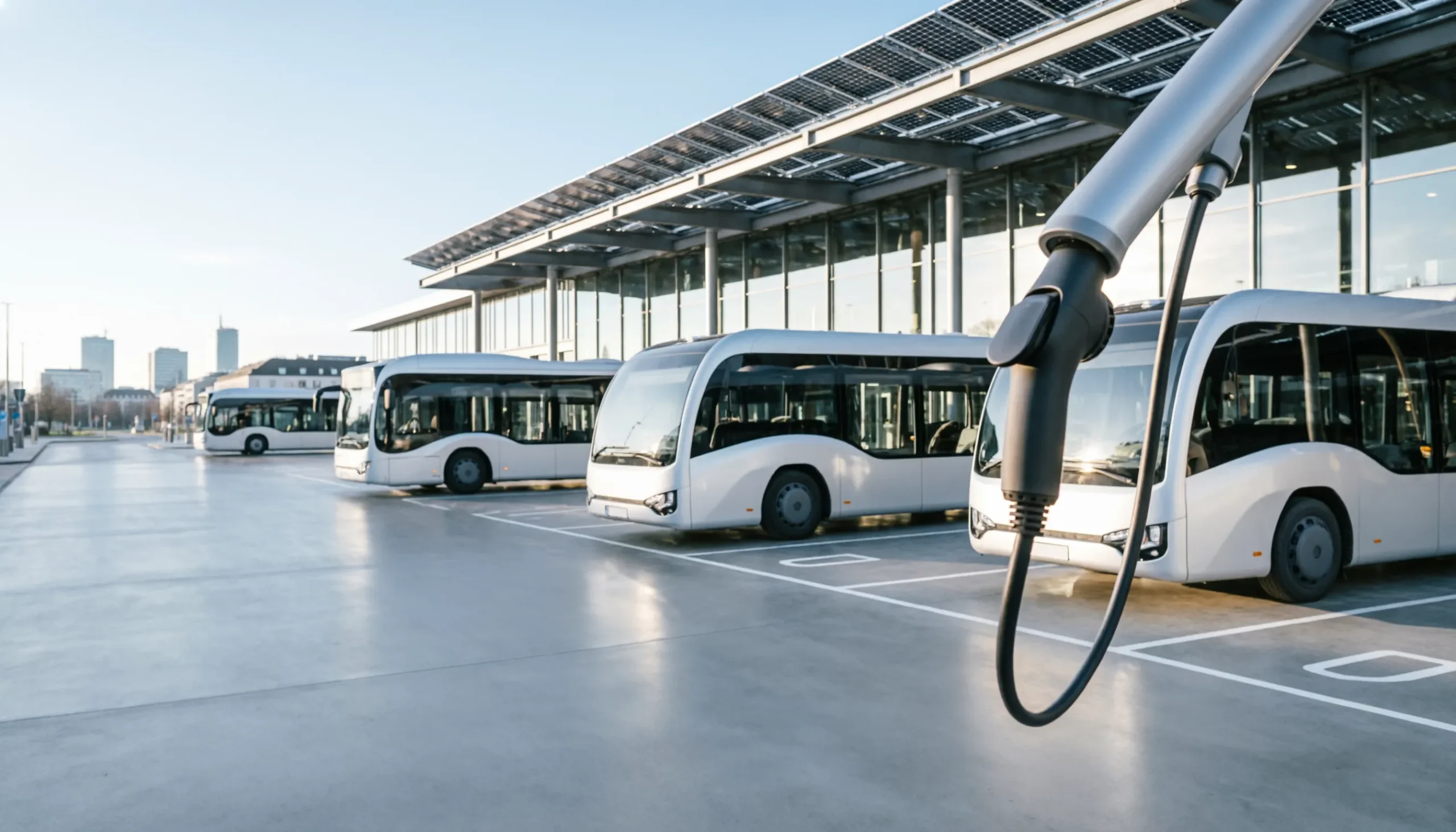
Daimler Buses is taking another significant step toward advancing electric mobility in long-distance and intercity transportation by expanding its proprietary charging network for battery-electric buses across Europe. As part of this broader strategy, the company plans to install four publicly accessible high-performance charging stations at the Central Bus Station (ZOB) in Munich by the end of 2026. This initiative reflects Daimler Buses’ commitment to enabling practical, real-world deployment of electric buses beyond traditional urban transit systems and into regional and intercity operations where infrastructure gaps have historically slowed adoption. To realize the Munich project, Daimler Buses has entered into a formal agreement with Wealthcap, the real-asset and investment manager representing ownership of the Munich ZOB property. The collaboration underscores a growing trend in which transportation electrification depends on coordinated partnerships between mobility providers, infrastructure developers, and real-estate stakeholders. Daimler Buses previously introduced its first public charging installations for electric buses in October 2025 through a pilot initiative conducted jointly with the city of Cologne. Building on lessons learned from that deployment, the company now aims to establish additional charging points at heavily trafficked transportation hubs and tourist destinations throughout Europe, creating a reliable corridor network that supports emission-free intercity travel. Implementation responsibility for the Munich charging infrastructure lies with Daimler Buses Solutions GmbH, a wholly owned subsidiary established specifically to design, finance, build, and operate charging systems tailored to commercial bus fleets.
Seamless Integration of Charging Into Bus Operations
A central advantage of the Munich ZOB charging concept is the seamless integration of energy replenishment into existing operational routines. According to Steffen Germ, Chief Executive Officer of Daimler Buses Solutions, electric buses stopping at the Munich terminal will be able to recharge precisely where passenger boarding and disembarking already occur, eliminating the need for schedule modifications or additional downtime. This operational compatibility is critical for long-distance and intercity bus services, where adherence to strict timetables directly affects service reliability, passenger satisfaction, and overall fleet economics. By embedding fast charging within standard dwell times—such as ticket verification, baggage handling, and routine layovers—bus operators can maintain continuous service cycles without introducing dedicated charging pauses or route deviations. The ability to combine routine operational stops with high-power energy transfer significantly improves the feasibility of deploying fully electric coaches on routes that extend beyond city limits, a segment that has traditionally posed challenges for battery-electric technology due to range requirements and infrastructure availability. Daimler Buses views this integration as a decisive enabler for scaling zero-emission mobility in regional transport networks, where electrification progress has lagged behind urban bus systems.
Supporting the Launch of the Mercedes-Benz eIntouro
The charging infrastructure expansion is closely aligned with the upcoming market rollout of the Mercedes-Benz eIntouro, Daimler Buses’ first fully electric intercity bus. Designed to connect urban centers with suburban and rural regions while also serving shorter excursion and shuttle routes, the eIntouro represents a strategic extension of electrification into new operational domains. Daimler Buses has emphasized that while the vehicle itself is technologically ready for widespread deployment, the pace of public charging infrastructure development across Europe remains insufficient to support rapid fleet transitions. By constructing and operating its own charging stations, the company intends to accelerate infrastructure availability and reduce barriers faced by transport operators considering electrification. Orders for the eIntouro have been open since spring 2025, and initial customer deliveries are scheduled for the second half of 2026, coinciding with the commissioning timeline for the Munich ZOB charging facilities. This synchronized rollout demonstrates Daimler Buses’ vertically integrated approach, ensuring that vehicle availability and charging readiness evolve in parallel rather than sequentially.
High-Power Charging Designed for Real-World Efficiency
The planned charging stations at Munich’s Central Bus Station will deliver power levels of up to 600 kilowatts, enabling extremely rapid battery replenishment suitable for commercial fleet operations. Such high charging capacity is essential for maintaining tight service intervals and maximizing daily vehicle utilization, both of which are critical economic factors for bus operators. Importantly, the infrastructure will be accessible to electric buses from all manufacturers, not solely Mercedes-Benz vehicles, reinforcing Daimler Buses’ intention to contribute broadly to public charging ecosystems rather than create a closed proprietary network. All charging energy supplied at the site will originate from renewable electricity sources, aligning the project with wider European climate objectives and municipal sustainability strategies. Because charging can occur during routine station stops, operators avoid the need for additional layovers, detours to remote depots, or complex logistical planning associated with mid-route energy replenishment. This operational simplicity reduces total cost of ownership while enhancing route flexibility, thereby strengthening the business case for electric intercity transport.
Construction Timeline and Technical Implementation
Development of the Munich ZOB charging hub will proceed in carefully phased stages throughout 2026. Two of the four planned charging stations are expected to be completed and ready for operation within the same year, ensuring early availability of infrastructure ahead of full project completion. Construction activities scheduled for the second quarter of 2026 include extensive civil engineering work, installation of high-voltage electrical cabling, placement of transformers necessary for grid connection and power management, and preparation of structural foundations to support the charging hardware. Following these technical preparations, commissioning and operational testing will occur later in 2026 to verify performance, safety, and interoperability with multiple bus platforms. This staged implementation approach allows Daimler Buses Solutions to validate system reliability while progressively expanding charging capacity at the site.
Turnkey Infrastructure Model With Independent Financing
Daimler Buses Solutions GmbH is responsible not only for engineering and construction but also for financing and long-term operation of the Munich charging stations. Working closely with experienced infrastructure and construction partners, the subsidiary delivers a turnkey solution that removes financial and technical burdens from property owners and transport authorities. Revenue generated through electricity sales will provide the primary mechanism for refinancing the investment, creating a self-sustaining operational model that supports future network expansion. After commissioning, Daimler Buses Solutions will manage maintenance, monitoring, and technical service using its own specialized teams, ensuring consistent performance and rapid response to operational requirements. For site owners such as the Munich ZOB, this arrangement offers immediate access to advanced charging infrastructure without the need for upfront capital expenditure or ongoing operational complexity.
Advancing Zero-Emission Mobility Across Europe
The Munich charging project illustrates Daimler Buses’ broader vision of enabling zero-emission mobility across diverse transportation environments, from dense metropolitan corridors to regional and cross-border routes. By proactively investing in infrastructure rather than waiting for public deployment to catch up with vehicle technology, the company positions itself as both a manufacturer and a mobility ecosystem provider. The integration of renewable energy supply, open access for multiple vehicle brands, and operational compatibility with existing schedules collectively address many of the practical barriers that have slowed electrification in long-distance bus transport. As additional charging hubs emerge at key European travel nodes and tourist destinations, electric intercity travel could transition from pilot deployments to mainstream adoption.
Electric Intercity Transportation
With customer deliveries of the Mercedes-Benz eIntouro approaching and high-power charging installations advancing in parallel, Daimler Buses is entering a pivotal phase in the electrification of coach and intercity services. The Munich ZOB initiative serves as both a functional infrastructure project and a demonstration of a scalable deployment strategy, showing how coordinated investment in vehicles, charging systems, and operational integration can accelerate the shift toward climate-neutral transportation. Continued expansion of similar charging hubs across Europe will be essential to unlocking the full environmental and economic benefits of electric bus technology, particularly in regions where long-distance mobility remains heavily dependent on conventional diesel fleets. Through sustained infrastructure development and strategic partnerships, Daimler Buses aims to transform electric intercity travel from an emerging concept into an everyday reality for operators and passengers alike.
Source Link:https://www.daimlertruck.com/