
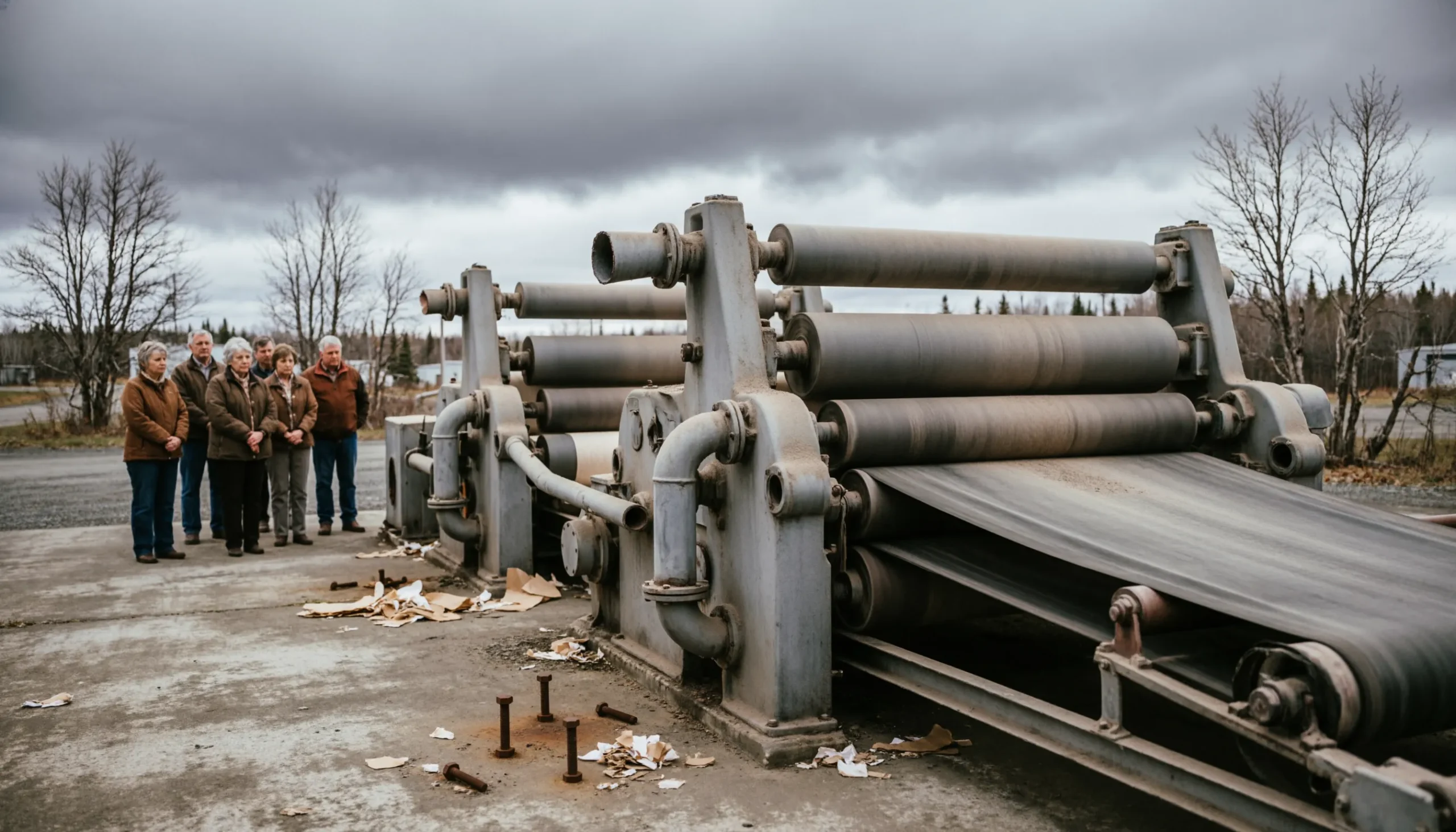
Smurfit Westrock Announces Strategic Closure at La Tuque Mill
Smurfit Westrock plc has revealed plans to permanently close one of the paper machines operating at its La Tuque facility in Quebec, marking a significant operational adjustment within the company’s North American paperboard manufacturing network. The machine, which has an annual production capacity of approximately 127,000 tons of solid bleached sulfate paperboard, has reportedly encountered persistent scale limitations and cost pressures that have affected its long-term economic sustainability. Company leadership indicated that the move forms part of a broader strategic effort to reinforce the competitiveness, efficiency, and resilience of its SBS portfolio while adapting to evolving global packaging demand, production economics, and regional supply chain realities.
Operational Realignment to Strengthen the SBS Portfolio
The decision to close the La Tuque paper machine reflects a wider transformation underway across the paper and packaging sector, where producers are increasingly focusing on optimized asset utilization, cost discipline, and targeted capital deployment. Solid bleached sulfate paperboard remains an important material for premium packaging applications such as consumer goods, foodservice, healthcare, and cosmetics, yet competitive pressures have intensified due to fluctuating raw material costs, energy pricing volatility, and shifting customer expectations around sustainability and performance. By consolidating production into more efficient assets and reducing exposure to structurally disadvantaged equipment, Smurfit Westrock aims to maintain strong service reliability while positioning its SBS platform for long-term growth and innovation.
Closure of Pointe-aux-Trembles Extrusion Facility
Alongside the La Tuque machine shutdown, the company confirmed it will also close its extrusion facility located in Pointe-aux-Trembles, Quebec, which currently converts grades produced on the affected paper machine. This integrated operational link means the extrusion site’s future viability is directly tied to the La Tuque production line, making simultaneous closure a logical step in the restructuring process. While the move streamlines the company’s manufacturing footprint, it also underscores the interconnected nature of modern packaging supply chains, where upstream and downstream processes must remain balanced to sustain cost efficiency, throughput stability, and consistent product quality for customers across multiple end-use sectors.
Workforce Impact and Employee Support Measures
Smurfit Westrock emphasized that the operational changes will result in a limited workforce reduction, affecting roughly 30 employees at the La Tuque mill and about 60 employees at the Pointe-aux-Trembles facility. Although the scale of the reduction is relatively modest compared with large industrial restructurings, the company acknowledged the human impact of the decision and reiterated its intention to support affected employees throughout the transition. Assistance measures are expected to include career transition services, guidance on alternative employment pathways, and potential relocation opportunities within the company’s broader operational network where feasible. Impacted workers will also receive severance aligned with local labor regulations, collective agreements, and established corporate policies, reflecting an effort to manage the transition responsibly and respectfully.
Leadership Perspective on Market Realities
According to Laurent Sellier, president and chief executive officer of Smurfit Westrock’s North America region, the closure represents a difficult but necessary step shaped by prevailing market conditions and long-term strategic priorities. Leadership framed the decision not as a retreat from Canadian manufacturing but as a recalibration designed to preserve competitiveness, sustain customer service standards, and ensure continued investment in stronger, more efficient production assets. The company reaffirmed its commitment to employees, regional operations, and customer relationships, highlighting that operational discipline today is intended to support stability, growth, and innovation in the years ahead.
Broader Industry Context and Competitive Pressures
The restructuring announcement arrives at a time when the global paperboard and packaging industry is navigating structural change driven by sustainability expectations, digital commerce expansion, and cost volatility across fiber, chemicals, logistics, and energy. Producers are increasingly rationalizing legacy capacity while investing in modern, high-efficiency machines capable of delivering lightweighting, recyclability, and enhanced barrier performance. Consolidation and asset optimization have therefore become common strategic responses, enabling companies to align production with demand patterns while maintaining profitability in a cyclical and capital-intensive sector. Smurfit Westrock’s decision mirrors these broader dynamics, suggesting an emphasis on disciplined portfolio management rather than volume expansion alone.
Commitment to Canadian Operations and Customers
Despite the closures, Smurfit Westrock underscored its ongoing commitment to Canada as a key region within its North American manufacturing and customer service network. The company continues to operate multiple facilities that supply paperboard and packaging solutions to a wide range of industries, and leadership signaled that maintaining reliable product availability and quality performance remains a central priority. Customers are not expected to experience significant disruption, as production can be balanced across remaining assets with sufficient capacity and logistical flexibility to meet contractual and market demand. This reassurance highlights the importance of network resilience in modern industrial operations, where redundancy and geographic diversification help safeguard service continuity.
Long-Term Strategic Positioning and Sustainability Goals
Looking ahead, the closure forms part of a longer-term transformation aimed at aligning Smurfit Westrock’s manufacturing base with sustainability ambitions, technological advancement, and evolving packaging requirements. Investments in efficient equipment, fiber optimization, and recyclable material innovation are increasingly central to competitiveness in the paperboard sector, particularly as regulators and brand owners push for lower environmental impact and circular material flows. By concentrating resources on facilities capable of meeting these expectations, the company seeks to strengthen both environmental performance and economic returns, reinforcing the role of paper-based packaging as a renewable alternative within global supply chains.
Transition Period and Future Outlook
As the closure process moves forward, operational planning will focus on safe shutdown procedures, employee transition support, and coordination with customers and suppliers to maintain smooth continuity. Such transitions typically unfold over carefully managed timelines to ensure regulatory compliance, environmental stewardship, and minimal disruption to surrounding communities. While the immediate announcement centers on capacity reduction, the broader narrative reflects strategic renewal rather than contraction, with Smurfit Westrock positioning itself to compete effectively in a packaging landscape defined by sustainability, efficiency, and innovation. The company’s leadership continues to stress that disciplined decisions today are intended to secure a stronger operational foundation for tomorrow, balancing economic realities with long-term growth ambitions across North America and beyond.
Source Link:https://www.businesswire.com/