
Canadian Shipyards Visit Hanwha Ocean to Explore CPSP Collaboration and MRO Opportunities
Hanwha Ocean by the Honourable Stephen Fuhr, Canada’s Secretary of State for Defence Procurement, brought together senior representatives from Canada’s leading shipyards for a detailed look at advanced submarine construction capabilities and long-term sustainment opportunities. The delegation’s engagement with one of the world’s foremost naval shipbuilders marked an important step in exploring potential industrial collaboration tied to Canada’s future submarine ambitions under the Canadian Patrol Submarine Project (CPSP).
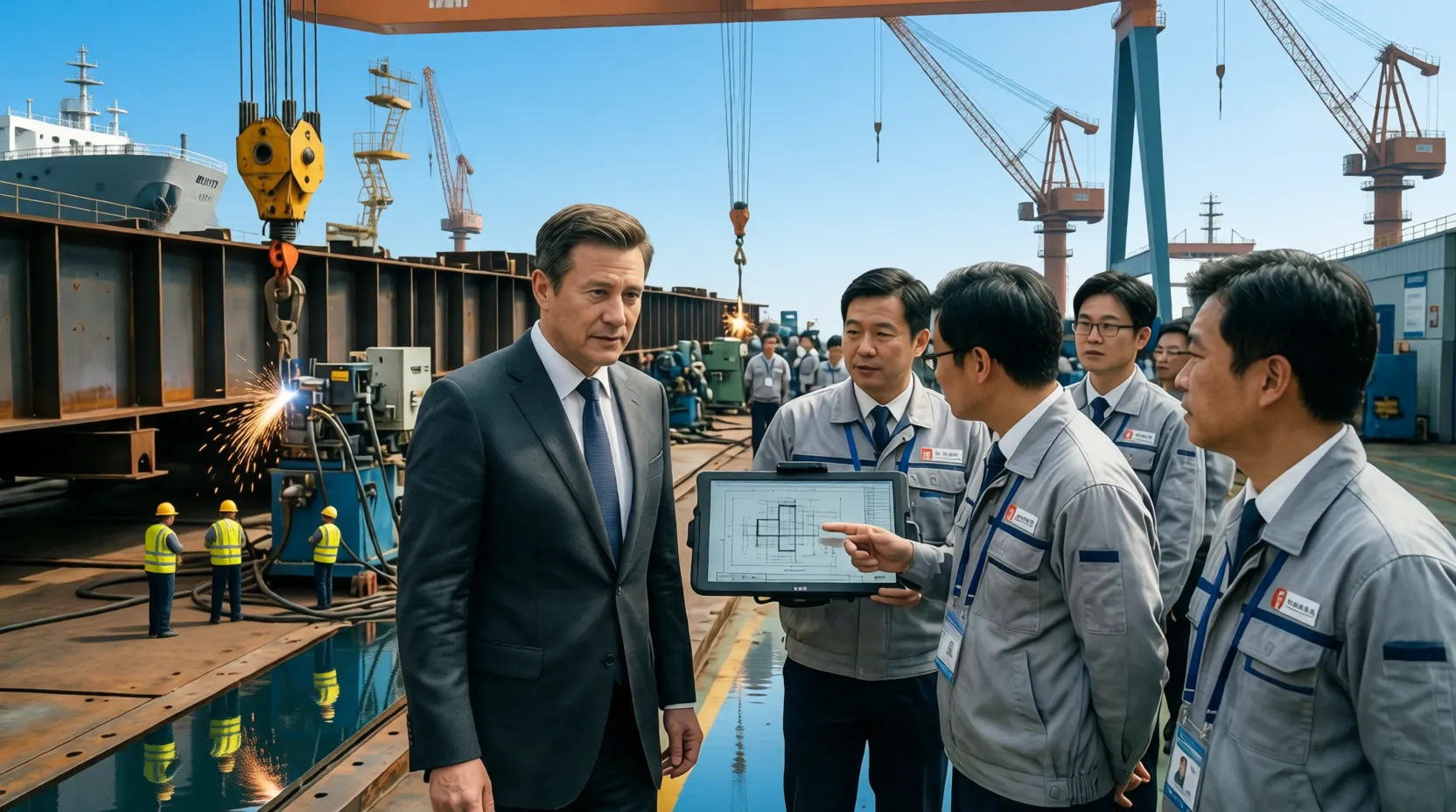
During the visit, representatives from Irving Shipbuilding, Seaspan Shipyards, Davie Shipbuilding, and Ontario Shipyards toured Hanwha Ocean’s extensive production facilities and observed modern shipbuilding technologies in operation. Their objective was to better understand how cooperation with an established global submarine builder could help reinforce Canada’s domestic shipbuilding sector, strengthen sovereign industrial capacity, and deliver meaningful economic and technological benefits across the country.
A central highlight of the visit was the opportunity to examine one of the largest and most technologically sophisticated shipbuilding complexes in the world. Delegates viewed the highly automated production line used to construct the KSS-III submarine, a next-generation platform currently in service with the Republic of Korea Navy. The group also boarded and inspected a completed KSS-III submarine that had been launched in October 2025, gaining first-hand insight into the design, construction quality, and onboard systems of the vessel that Hanwha Ocean is proposing as a candidate for Canada’s future submarine fleet.
Beyond the technical showcase, discussions focused heavily on long-term collaboration, particularly in the areas of maintenance, repair, and overhaul (MRO), workforce development, and knowledge transfer. The presence of Canada’s four principal shipyards underscored the strategic importance of ensuring that any future submarine program generates sustained domestic economic activity rather than relying solely on overseas support. Canadian industry leaders were especially interested in how local facilities could evolve into capable sustainment hubs able to service submarines throughout their operational life cycles.
Hanwha Ocean presented a framework for developing Canadian-based MRO capabilities grounded in its operational experience supporting the in-service KSS-III fleet. This framework emphasized structured training pathways for Canadian engineers, technicians, and naval specialists, combining classroom instruction with hands-on participation in real maintenance and overhaul activities. Such an approach would allow Canadian personnel to gradually acquire the certifications and technical proficiency required to independently manage complex submarine sustainment tasks.
Another key element involved embedding proven production, sustainment, and quality-assurance methodologies within Canadian shipyards. By transferring established best practices rather than starting from scratch, the collaboration could accelerate Canada’s ability to build a durable, high-confidence submarine support ecosystem. Over time, progressive localization of advanced technologies—including lithium-ion battery propulsion systems, air-independent propulsion (AIP), and vertical launch system (VLS) integration—could further deepen domestic technical expertise and reduce long-term reliance on foreign supply chains.
Hands-on technical instruction formed a cornerstone of the proposed cooperation model. Training would extend beyond routine maintenance procedures to include safety protocols, diagnostic systems, modernization processes, and full life-cycle sustainment planning for both legacy and emerging submarine technologies. The objective would be to cultivate a highly skilled Canadian workforce capable of supporting sophisticated underwater platforms across decades of service.
Equally important were discussions surrounding long-term industrial partnerships designed to preserve institutional knowledge and maintain continuous capability growth within Canada. By aligning workforce development strategies with future sustainment needs, the collaboration could support stable, high-value employment while ensuring that specialized submarine expertise remains rooted domestically. Such continuity is widely regarded as essential for maintaining operational readiness and technological sovereignty in complex naval programs.
The broader vision outlined during the visit pointed toward the creation of a Canadian-centered submarine sustainment ecosystem. Under this model, domestic shipyards would not only handle routine servicing but could eventually participate in deeper modernization, refit, and upgrade activities. This evolution would enable Canada to retain more economic value within its borders while simultaneously strengthening national security through greater self-reliance.
Over the longer term, strengthened Canadian industrial capability could also open pathways to participation in international submarine support and supply networks. With sufficient expertise and infrastructure, Canadian partners might contribute components, engineering services, or sustainment solutions to global submarine programs in collaboration with Hanwha Ocean. Such export-oriented activity would further enhance the economic case for domestic investment while positioning Canada as a meaningful player in the global naval industry.
In addition to touring Hanwha Ocean’s shipbuilding facilities, the Canadian delegation visited the Republic of Korea Navy’s Submarine Force Command. There, officials met with the Korean Navy’s Chief of Naval Operations and senior submarine leadership to discuss operational experience with the KSS-III platform and broader submarine fleet management practices. The visit included tours of an active-duty submarine, specialized training infrastructure, and dedicated MRO facilities that support ongoing fleet readiness.
These engagements provided Canadian representatives with practical insight into how submarine crews are trained, how sustainment operations are organized, and how advanced underwater capabilities are maintained in an operational environment. The experience highlighted potential opportunities for future cooperation between the Royal Canadian Navy and the Republic of Korea Navy, particularly during the period when Canada’s next-generation submarines would be under construction.
One concept discussed involved Canadian sailors training alongside their Korean counterparts using established submarine training centers and simulators. Such an arrangement could accelerate crew readiness ahead of vessel delivery while strengthening bilateral naval cooperation in the Indo-Pacific region. Additionally, forward maintenance and logistical support in Korea could provide operational flexibility for Canadian submarines deployed far from home waters.
Taken together, the visit represented more than a ceremonial engagement; it served as a working exploration of how international industrial collaboration might support Canada’s long-term defence objectives. By combining advanced shipbuilding expertise with domestic workforce development and sustainment planning, the discussions pointed toward a model capable of delivering both military capability and enduring economic value.
For Canada, the CPSP represents a generational investment in underwater defence capacity. Ensuring that this investment translates into domestic industrial growth, skilled employment, and technological advancement remains a central priority for government and industry alike. Engagements such as the Hanwha Ocean visit help clarify what forms of partnership could realistically achieve those outcomes.
For Hanwha Ocean, the dialogue reflects an opportunity to expand international cooperation while demonstrating the maturity of its submarine design, production, and sustainment ecosystem. Showcasing operational platforms, automated manufacturing, and integrated training infrastructure allowed Canadian stakeholders to evaluate not only the submarine itself but the full support architecture behind it.
As discussions continue, the emphasis is likely to remain on balancing proven international capability with strong domestic participation. The long service life of submarines—often measured in decades—means that sustainment, workforce continuity, and industrial resilience are just as critical as initial construction.
Ultimately, the visit underscored a shared recognition that modern submarine programs extend far beyond ship delivery. They encompass training, maintenance, technological evolution, and enduring industrial collaboration. Whether through workforce development, localized MRO capability, or participation in global supply networks, the pathways explored during the delegation’s visit could play a defining role in shaping Canada’s future submarine enterprise.
Source Link:https://www.hanwha.com/