
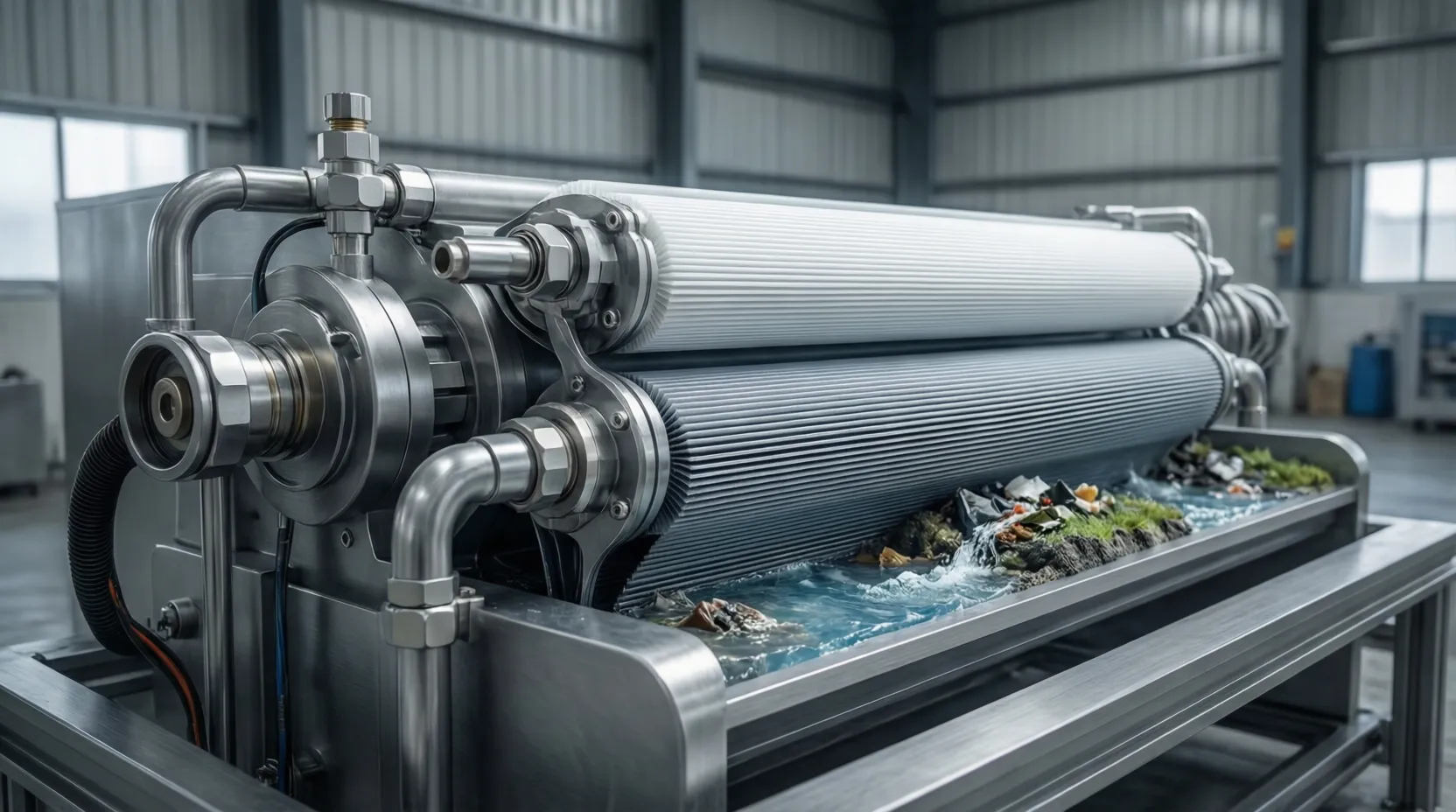
Sumitomo Electric has introduced a compact membrane treatment system designed to significantly reduce the volume of industrial wastewater and waste liquids requiring disposal, marking an important step forward in sustainable manufacturing and resource efficiency. Built around the company’s proprietary polytetrafluoroethylene (PTFE)–based POREFLON™ membrane technology, the newly launched solution enables high-precision filtration of oil-containing wastewater while simultaneously supporting liquid concentration and water reuse. Through this dual capability, the system addresses two of the most pressing challenges faced by modern industrial facilities: minimizing environmental impact and lowering operational waste-management costs.
Industrial processes such as waterjet cutting, precision machining, grinding, and degreasing routinely generate complex wastewater streams that contain oil residues, suspended solids, and specialized processing fluids. Treating and disposing of these liquids can be both technically demanding and financially burdensome, particularly as environmental regulations become stricter and companies pursue sustainability targets aligned with circular-economy principles. Sumitomo Electric’s compact membrane treatment system is engineered to respond directly to these pressures by enabling on-site treatment that dramatically decreases the volume of waste requiring external disposal—achieving reductions of up to 90% for certain wastewater streams.
At the core of the system lies the POREFLON™ membrane, a porous PTFE-based filtration material developed by Sumitomo Electric. PTFE is widely recognized for its exceptional chemical resistance, mechanical durability, and stability across a broad temperature and pH range. By leveraging these inherent properties and refining them into a highly porous filtration membrane, Sumitomo Electric has created a material capable of handling challenging industrial liquids that would degrade or clog conventional filtration media. The membrane’s micro-scale filtration precision enables removal of particles measuring 0.1 micrometers and larger, ensuring highly effective separation of contaminants from reusable liquids.
Beyond simple filtration, the system is designed to concentrate waste liquids while recovering clean water or reusable process fluid. This concentration capability is particularly valuable in industries where disposal costs scale with waste volume. By reducing the total quantity of liquid waste, facilities can lower transportation, treatment, and compliance expenses while also decreasing their environmental footprint. At the same time, recovered water or coolant can be reused within production processes, reducing overall consumption of fresh resources and supporting closed-loop manufacturing practices.
A defining characteristic of the new treatment system is its compact and portable design. Traditional wastewater treatment infrastructure often requires substantial installation space, fixed piping, and high power consumption—factors that limit deployment flexibility and increase capital expenditure. Sumitomo Electric’s solution addresses these limitations by offering a space-saving footprint, simplified installation, and operation using a single-phase 100-volt power supply. These features make it feasible to deploy the system across multiple production sites or relocate it as operational needs evolve, enabling manufacturers to integrate advanced wastewater treatment without major facility modifications.
Verification testing conducted by Sumitomo Electric demonstrates strong treatment performance across multiple industrial applications. Trials targeting wastewater generated from waterjet cutting processes showed a reduction in disposal volume of approximately 90%, while testing with cutting and grinding coolant achieved an 86% reduction. These results highlight the membrane’s effectiveness in separating oil-laden liquids and concentrating residual waste, confirming the system’s practical value for manufacturers seeking measurable sustainability improvements. Such performance metrics are particularly meaningful in sectors where coolant and cutting fluids represent a substantial portion of liquid waste streams.
The real-world applicability of the technology is further illustrated by its adoption at SHINTORA Holdings Co., Ltd., headquartered in Osaka. SHINTORA generates wastewater during the waterjet cutting of thick composite materials—a process that produces oil-containing liquids and fine particulate matter requiring careful handling. The company selected Sumitomo Electric’s membrane treatment system based on several key considerations: its ability to safely treat oily wastewater, its effectiveness in reducing industrial waste volume, its contribution to water conservation, and its compact, portable configuration suitable for on-site deployment. In addition to environmental benefits, SHINTORA also prioritized enhanced operational safety, including reduced ignition risk during equipment removal and improved management of hazardous liquids.
This early adoption underscores the broader industrial relevance of compact membrane treatment technologies. As manufacturers across sectors—from aerospace and automotive to electronics and heavy machinery—seek to balance productivity with environmental responsibility, solutions that integrate seamlessly into existing workflows are becoming increasingly valuable. Portable treatment systems enable decentralized wastewater management, allowing facilities to treat liquids at the source rather than relying solely on centralized treatment infrastructure. This shift not only improves efficiency but also aligns with emerging regulatory and sustainability expectations worldwide.
Sumitomo Electric positions the new system as part of its ongoing contribution to circular-economy initiatives. By enabling reuse of treated water and reduction of waste-liquid disposal, the technology supports resource circulation rather than linear consumption. Circular approaches are gaining prominence across global industry as companies aim to decouple economic growth from resource depletion and environmental degradation. Technologies that recover usable materials from waste streams—such as advanced membrane filtration—play a central role in achieving these goals.
From a technical perspective, the POREFLON™ membrane offers several performance advantages that differentiate it from conventional filtration materials. Its chemical resistance allows exposure to cleaning solutions across an extreme pH range from 0 to 14, including highly alkaline substances commonly used in industrial maintenance. This resilience ensures long operational life and consistent treatment performance even under demanding conditions. Additionally, specialized hydrophilic surface treatment minimizes oil adhesion, allowing contaminants to detach more easily during cleaning and reducing the risk of membrane fouling—a common challenge in oily wastewater filtration.
Mechanical durability is another defining feature. The PTFE-based structure resists tearing, vibration, and bending, enabling stable performance in industrial environments where equipment may experience physical stress. High porosity further enhances permeability, allowing strong treatment capacity without excessive pressure or energy consumption. Together, these attributes contribute to lower maintenance requirements, extended service life, and reliable long-term operation—factors that significantly influence total cost of ownership for industrial treatment equipment.
The system’s equipment specifications reflect its practical design philosophy. With a processing flow rate of up to five cubic meters per day—depending on raw water characteristics—it is suited for localized or medium-scale treatment scenarios common in machining and fabrication facilities. Configurable membrane modules ranging from one to five units allow performance to be tailored to specific operational needs. Compact physical dimensions support installation in constrained industrial spaces, reinforcing the system’s role as a flexible on-site treatment solution.
Potential application areas extend well beyond waterjet cutting and machining coolant. The membrane system is also suitable for treating lubricating oils, degreasing liquids, and other specialized industrial solutions that contain emulsified oil or fine particulates. This versatility broadens its relevance across multiple manufacturing domains and increases the likelihood of widespread adoption as industries intensify efforts to manage wastewater responsibly.
Technologies such as Sumitomo Electric’s compact membrane treatment system are poised to become increasingly important as environmental regulations tighten and sustainability reporting becomes more rigorous. Companies are under growing pressure to demonstrate measurable reductions in waste generation, water consumption, and environmental risk. Equipment that delivers quantifiable improvements—such as up to 90% waste-volume reduction—provides a tangible pathway toward meeting these expectations while also delivering economic benefits through resource savings and reduced disposal costs.
Moreover, decentralized treatment solutions may play a pivotal role in future smart-factory ecosystems. As manufacturing facilities adopt digital monitoring, automation, and real-time resource management, compact treatment units could integrate into broader environmental control systems that optimize water reuse and waste minimization dynamically. Membrane technologies with high durability and low maintenance requirements are particularly well suited to such automated environments.
Sumitomo Electric’s continued commitment to verification testing and real-world deployment suggests an ongoing evolution of the technology. Future developments may include expanded treatment capacity, enhanced monitoring capabilities, or integration with renewable-energy-powered operations—further strengthening the environmental value proposition. Collaboration with industrial partners, such as the deployment at SHINTORA Holdings, will likely remain essential for refining performance and demonstrating applicability across diverse manufacturing contexts.
The launch of Sumitomo Electric’s compact PTFE-membrane treatment system represents a meaningful advancement in industrial wastewater management. By combining high-precision filtration, waste-liquid concentration, water reuse capability, compact portability, and strong chemical and mechanical durability, the solution addresses critical environmental and operational challenges faced by modern manufacturers. Verified reductions of up to 90% in wastewater disposal volume highlight its tangible sustainability impact, while real-world adoption underscores practical feasibility.
As industries worldwide transition toward circular resource use and stricter environmental stewardship, innovations in membrane filtration technology will play an increasingly central role. Sumitomo Electric’s POREFLON™-based system demonstrates how material science, engineering design, and sustainability objectives can converge to deliver practical solutions—supporting both industrial productivity and long-term environmental responsibility.
Source Link:https://sumitomoelectric.com/