
Greenland Resources Signs Long-Term Molybdenum Supply MOU With GMH Gruppe, Strengthening Europe’s Critical Minerals Security
Greenland Resources Inc. (TSX: MOLY, FSE: M0LY) (“Greenland Resources” or the “Company”) has taken another significant step toward securing Europe’s supply of critical minerals by signing a memorandum of understanding (MOU) for the long-term supply of molybdenum products with GMH Gruppe SE & Co. KG (“GMH”), one of Europe’s leading steel producers and processors.The MOU follows the European Commission’s December 3, 2025 announcement of RESourceEU, a strategic initiative aimed at strengthening the European Union’s access to critical raw materials. In that announcement, Greenland Resources’ Malmbjerg molybdenum project in Greenland was highlighted as a priority EU project—underscoring its importance to Europe’s industrial and strategic supply chains.
Under the MOU, the parties will advance toward a long-term supply agreement covering ferro-molybdenum, molybdenum oxide, and molybdenum briquettes produced from ore extracted at Greenland Resources’ Malmbjerg project in Greenland. The material will be refined in Belgium before being supplied to GMH, ensuring that the entire value chain meets high European environmental, social, and governance standards.
For GMH, the agreement represents a strategic opportunity to secure a stable, long-term supply of responsibly sourced molybdenum from an EU associate country. The arrangement is aligned with GMH’s sustainability objectives and its commitment to reducing emissions across its supply chain. GMH is widely recognized as a pioneer in sustainable steel production, operating electric arc furnaces that rely on recycled scrap and generate approximately 80 percent fewer CO₂ emissions than conventional steelmaking methods.
GMH Gruppe operates more than 15 production facilities, primarily located in Germany, and supplies customized steel solutions to a wide range of industrial sectors. These include automotive, energy, raw materials, aerospace, defence, agricultural and construction machinery, tooling, mechanical engineering, and transportation. Molybdenum plays a critical role in enhancing the strength, durability, and performance of specialty steels used across these industries.
The agreement also reflects growing international cooperation around critical minerals. Honourable Tim Hodgson, Canada’s Minister of Energy and Natural Resources, welcomed the development, highlighting its importance for both Canada and its European partners.
Last year I was pleased to travel to Berlin and sign a Declaration of Intent with Germany to strengthen cooperation on critical minerals,” Minister Hodgson said. “Following that, in October 2025, on the margins of the G7 Energy and Environment Ministers’ Meeting in Toronto, the Government of Canada issued a communiqué where the Canadian mining company Greenland Resources was highlighted for its contribution to the Italian steel sector. Now, I am pleased to see Greenland Resources moving forward and also contributing to the German steel industry, another important G7 ally.”
He added that the agreement demonstrates how Canada is working with international partners to create pathways that secure economic opportunity and trade growth for Canadian companies while reinforcing supply chain resilience among allied nations.
The European Union is currently the world’s second-largest consumer of molybdenum, with substantial processing capacity but no domestic extraction. Germany is the EU’s largest molybdenum user and has classified the metal in the highest-risk “Category 3” of its Criticality List of strategic raw materials. Molybdenum is also included on Canada’s official critical minerals list, reflecting its growing strategic importance.
By advancing the Malmbjerg project and establishing long-term supply relationships with major European industrial partners, Greenland Resources is positioning itself as a key contributor to the diversification and security of global molybdenum supply. The MOU with GMH marks another milestone in the Company’s efforts to support low-carbon industrial development while strengthening critical mineral supply chains between Canada, Greenland, and Europe.
About GMH Group
GMH Gruppe is a full-service provider of steel products, ranging from scrap-based steelmaking to ready-to-install components. It is one of Europe’s largest privately owned metal-processing companies. The group comprises more than 20 medium-sized steel, forging and casting industry sites, serving customers in over 50 countries. With around 6,000 employees, GMH Gruppe generates annual revenues of over 2 billion euros. GMH Gruppe is a pioneer in sustainable steel production and a member of the ‘German Association of Climate Protection Companies’. By recycling metal scrap, the company produces green steel and contributes to a circular economy. The use of electric arc furnaces at four sites reduces CO2 emissions by 80% compared to the conventional blast furnace and converter route. This also reduces the carbon footprint of customers supplied by GMH. These include companies from the automotive, mechanical engineering, railway, energy, logistics, aerospace, agriculture, and construction machinery sectors.
About Greenland Resources Inc.
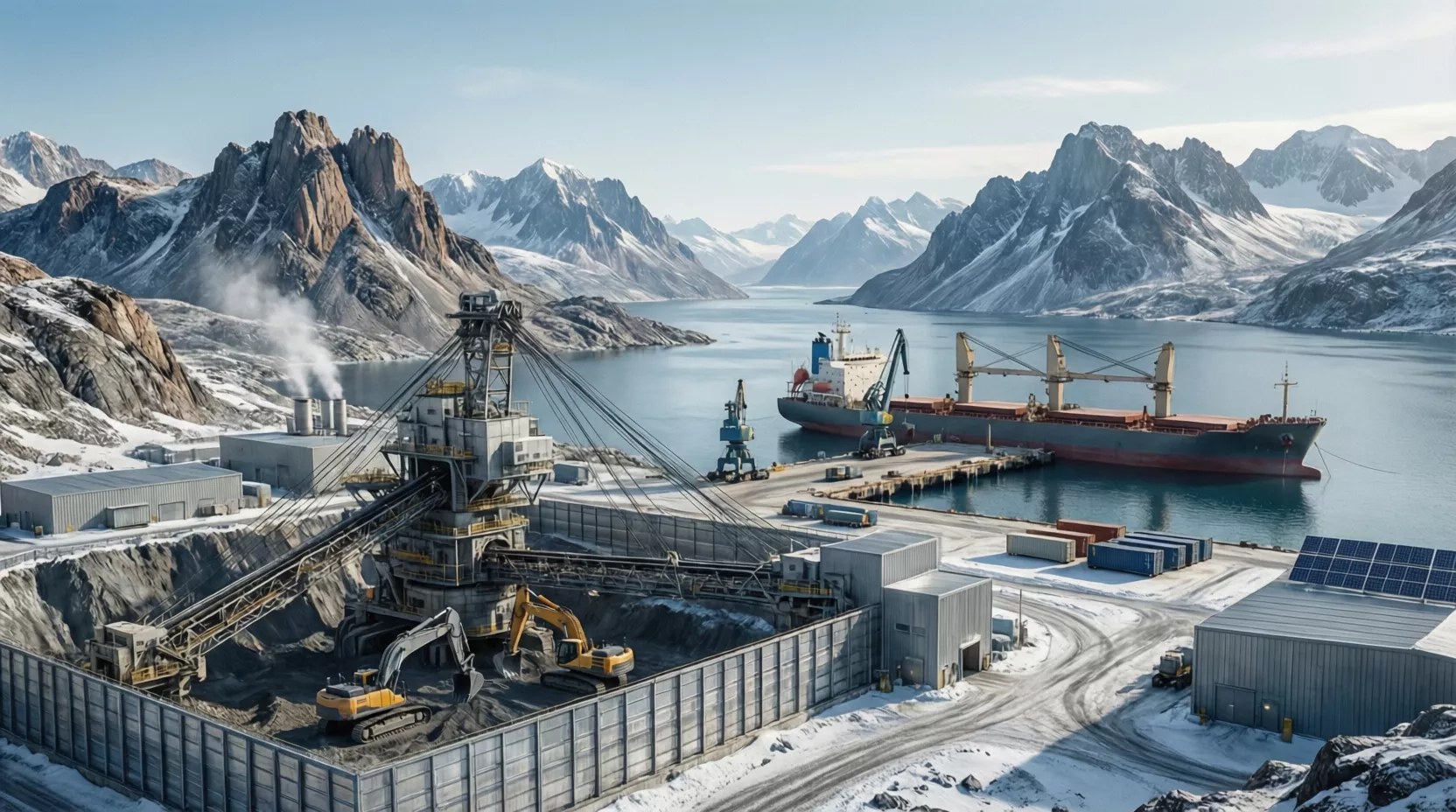
Greenland Resources is a Canadian public company with the Ontario Securities Commission as its principal regulator and is focused on the development of its 100% owned Climax type primary molybdenum deposit located in central east Greenland. The Project has also magnesium as a byproduct, a market dominated 89% by China. The Malmbjerg project is an open pit operation with an environmentally friendly mine design focused on reduced water usage, low aquatic disturbance and low footprint due to modularized infrastructure. The Malmbjerg project benefits from an NI 43-101 Definitive Feasibility Study completed by Tetra Tech in 2022, with an US$820 million capex and a levered after-tax IRR of 33.8% and payback of 2.4 years, using US$18 per pound molybdenum price. The Proven and Probable Reserves are 245 million tonnes at 0.176% MoS2, for 571 million pounds of contained molybdenum metal. As the high-grade molybdenum is mined for the first half of the mine life, the average annual production for years one to ten is 32.8 million pounds per year of contained molybdenum metal at an average grade of 0.23% MoS2, approximately 25% of EU total yearly consumption and 100% of EU defence needs. On byproduct magnesium, the project uses approximately 35,000 m3 per day of saline water with around 900 ppm of magnesium and the Company is working on extracting magnesium from the saline water using innovative technologies. In addition, the molybdenum concentrate has a magnesium component. The Company is aiming to incorporate magnesium in the economics of the feasibility study. On June 19, 2025, The Company was awarded an exploitation license for molybdenum and magnesium. With offices in Toronto, the Company is led by a management team with an extensive track record in the mining industry and capital markets.