
Global Synthetic Biology Market driven by sustainability policies and carbon pricing
The global synthetic biology and biomanufacturing market stands as one of the most transformative segments of the modern bioeconomy. Positioned at the convergence of advanced biotechnology, computational biology, and sustainable manufacturing, the market applies engineering principles to biological systems to design, construct, and optimize production pathways. These technologies enable the industrial-scale manufacture of chemicals, materials, fuels, pharmaceuticals, and food ingredients using biological processes rather than traditional petrochemical routes.
As industries worldwide accelerate their transition toward sustainability, synthetic biology has emerged as a foundational technology enabling cleaner, more efficient, and highly customizable manufacturing models across multiple sectors.
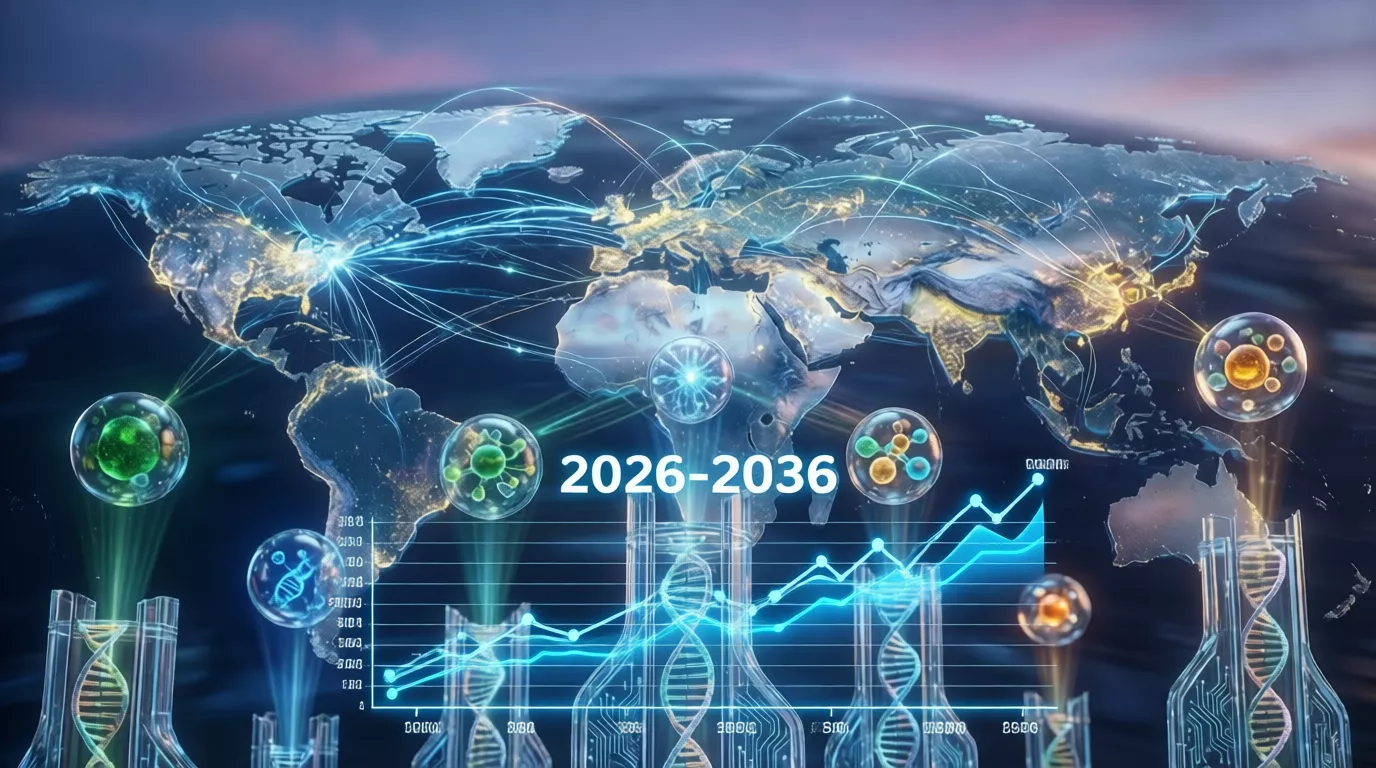
Strong Growth Outlook Through 2036
The synthetic biology and biomanufacturing market is projected to experience robust growth through 2036, driven by the rapid adoption of bio-based production methods across nearly all industrial sectors. Companies are increasingly replacing conventional manufacturing processes with biological alternatives to reduce carbon footprints, comply with evolving regulations, and meet corporate sustainability commitments.
Within this ecosystem, the industrial enzymes segment plays a critical role and is forecast to expand at a compound annual growth rate (CAGR) of 8.6%. Growth is supported by rising demand from detergents, food processing, textiles, biofuels, and pharmaceutical manufacturing, where enzymes improve efficiency, reduce energy consumption, and lower environmental impact.
Core Technology Platforms Driving Market Transformation
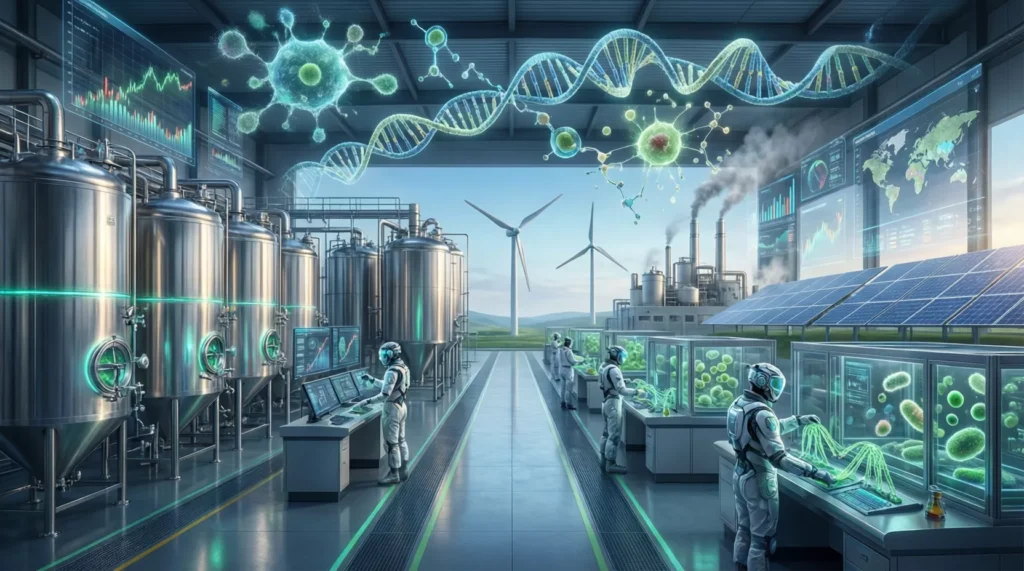
Three major technology platforms are reshaping the synthetic biology and biomanufacturing landscape.
Precision fermentation uses genetically engineered microorganisms to produce targeted proteins, enzymes, and metabolites with high efficiency and consistency. This technology is gaining traction in alternative proteins, dairy substitutes, specialty chemicals, and pharmaceutical ingredients.
Cell-free systems represent an emerging paradigm that eliminates the constraints of living cells. These systems deliver faster reaction times, cleaner product profiles, and energy efficiency improvements of 40–70%, making them attractive for high-value and time-sensitive applications.
AI-designed enzymes combine machine learning with computational biology to dramatically shorten enzyme development timelines. Processes that once took years can now be completed in weeks, allowing rapid optimization of biocatalysts for industrial-scale deployment.
Broad Application Spectrum Across Six Key Sectors
The market spans six primary application areas, each contributing to overall growth.
Biopharmaceuticals remain the largest segment, encompassing monoclonal antibodies, recombinant proteins, vaccines, biosimilars, and advanced cell and gene therapies.
Industrial enzymes support a wide range of applications including detergents, food processing, textiles, paper and pulp, leather treatment, and biofuel production. Carbohydrases alone account for approximately 38% of this segment’s market share.
Biofuels include bioethanol, biodiesel, biogas, sustainable aviation fuel, and emerging biohydrogen technologies aimed at decarbonizing transportation and energy systems.
Bioplastics and biomaterials cover products such as polylactic acid (PLA), polyhydroxyalkanoates (PHAs), bio-based polyethylene, and next-generation materials like spider silk proteins and mycelium-based composites.
Biochemicals comprise organic acids, amino acids, vitamins, biosurfactants, and bio-based monomers used in industrial and consumer applications.
Bio-agritech focuses on biopesticides, biofertilizers, and biostimulants that promote sustainable agricultural productivity and soil health.
Key Drivers Accelerating Market Adoption
Multiple structural forces are propelling market expansion. Regulatory mandates increasingly favor bio-based manufacturing, while carbon pricing mechanisms improve the cost competitiveness of biological production pathways. At the same time, advances in CRISPR genome editing, DNA synthesis, metabolic engineering, and high-throughput screening have significantly reduced development timelines and costs.
The convergence of artificial intelligence with biological design is accelerating the discovery of new enzymes and metabolic pathways, unlocking faster innovation cycles. Corporate sustainability targets and growing consumer demand for environmentally responsible products further reinforce adoption across global supply chains.
Competitive Landscape and Investment Momentum
The competitive environment features a mix of established biotechnology and chemical companies alongside a rapidly expanding ecosystem of startups and platform technology providers. More than 700 companies operate across the value chain, from strain engineering and foundational technologies to large-scale production and finished product development.
Investment activity remains strong, supported by venture capital, corporate strategic partnerships, and government funding programs. Public initiatives such as the U.S. Bioeconomy Strategy, the EU Green Deal, and China’s biotechnology policies provide regulatory clarity and financial backing for long-term growth.
Integrated View of the Biomanufacturing Ecosystem
This report adopts an integrated perspective, recognizing synthetic biology, industrial enzymes, and white biotechnology as interconnected components of a single industrial biomanufacturing ecosystem rather than isolated markets. Precision fermentation, cell-free systems, and AI-designed enzymes collectively represent the technological backbone enabling unprecedented scalability, efficiency, and sustainability.
The biomanufacturing revolution is increasingly replacing petrochemical processes across pharmaceuticals, consumer goods, agriculture, energy, and materials, reshaping industrial production models worldwide.
Report Scope and Key Inclusions
The report provides comprehensive coverage of the global synthetic biology and biomanufacturing market, including:
- Executive summary with key findings, market size projections, and a technology roadmap through 2036
- In-depth analysis of precision fermentation, cell-free systems, AI-designed enzymes, genome editing, and bioprocess development
- Industrial enzymes and biocatalysts analysis by type and application
- End-use market analysis across biopharmaceuticals, agriculture, biochemicals, bioplastics, biofuels, environmental solutions, and consumer goods
- Global revenue forecasts by technology platform, product category, application sector, and region
- Industry analysis including SWOT assessment, value chain mapping, regulatory landscape, and technology readiness levels
- Profiles of more than 900 companies operating across the market
- 348 data tables and 158 figures with forecasts extending to 2036
About ResearchAndMarkets.com
ResearchAndMarkets.com is the world’s leading source for international market research reports and market intelligence. The platform provides up-to-date data on global and regional markets, industry trends, leading companies, new product developments, and emerging technologies, supporting informed strategic decision-making across industries.
Source link: https://www.businesswire.com/